
Advertisement for FMC Corporation Tomato Harvester, circa 1966
THF610767 / Advertisement for FMC Corporation Tomato Harvester, circa 1966 / front
01
Artifact Overview
Artifact Details
Artifact
Advertisement
Date Made
circa 1966
Subject Date
circa 1966
Creators
Collection Title
Location
Not on exhibit to the public.
Object ID
2020.85.1
Credit
From the Collections of The Henry Ford.
Material
Paper (Fiber product)
Technique
Printing (Process)
Color
Multicolored
Dimensions
Height: 11.063 in
Width: 8.125 in
Keywords |
|---|
02
Related Artifacts
 Artifact
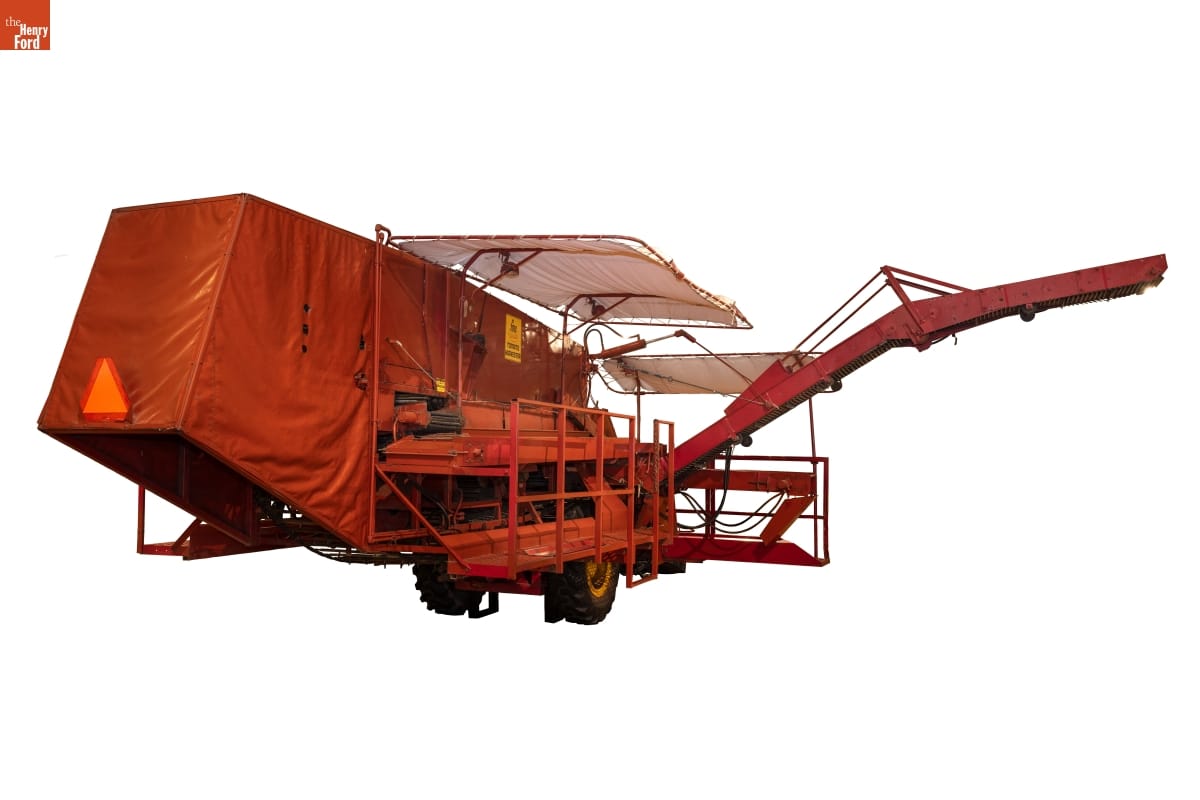
FMC Tomato Harvester, 1969
Tomatoes need careful handling. Growers who contract with processors used to rely on human laborers. The quest to plant and harvest more, faster, gave mechanical engineers and plant geneticists incentive to design a machine and a tomato it could harvest. The FMC Cascade Harvester carried 10-12 laborers who sorted debris out of the crop, fewer laborers than growers had needed for handpicking.
03
Related Content
 article
Mechanizing the Tomato Harvest
Learn how the way humans harvested tomatoes had to change, becoming more mechanized, as market demand increased and commercial growing and canning grew. article
Contradictory Impacts: Mechanizing California’s Tomato Harvest
While mechanical tomato harvesters represent large-scale scientific and industrial advances, they also offer insight into this country’s complex labor history.