
Search
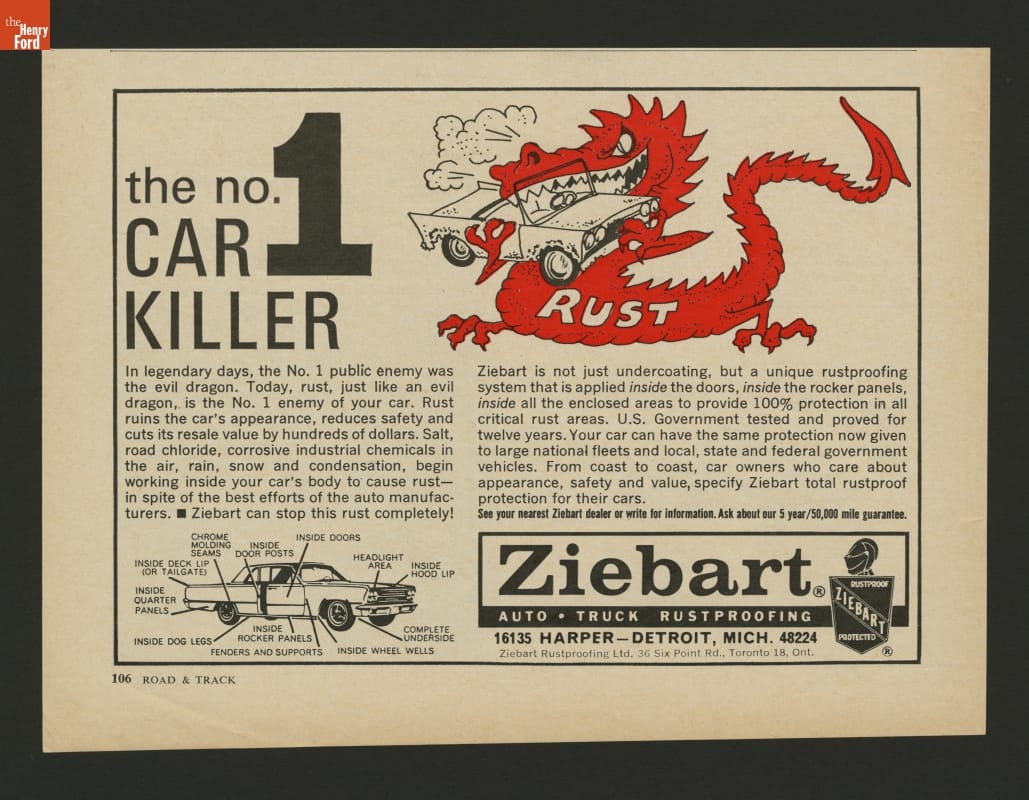
- Ziebart Rustproofing Ad, "The No. 1 Car Killer, Rust," 1966 -
- 1966
- Collections - Artifact
Ziebart Rustproofing Ad, "The No. 1 Car Killer, Rust," 1966
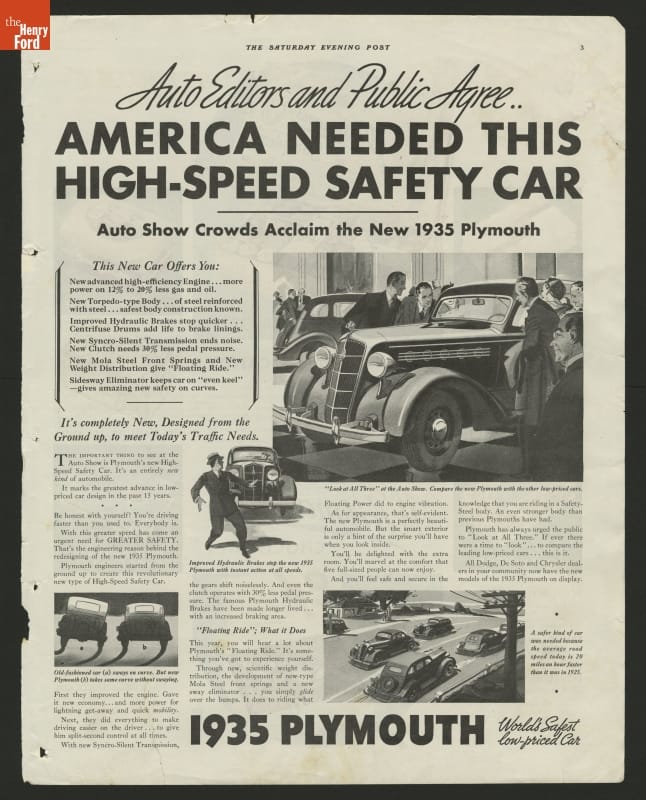
- 1935 Plymouth Ad, "America Needed This High-Speed Safety Car" - This ad praised the safety features of the 1935 Plymouth. Among the new offerings were a "Safety-Steel" body, added power and mobility control, and improved hydraulic brakes. These safety improvements, the ad contends, were made to meet the high-speed traffic needs of 1930s drivers.
- January 19, 1935
- Collections - Artifact
1935 Plymouth Ad, "America Needed This High-Speed Safety Car"
This ad praised the safety features of the 1935 Plymouth. Among the new offerings were a "Safety-Steel" body, added power and mobility control, and improved hydraulic brakes. These safety improvements, the ad contends, were made to meet the high-speed traffic needs of 1930s drivers.
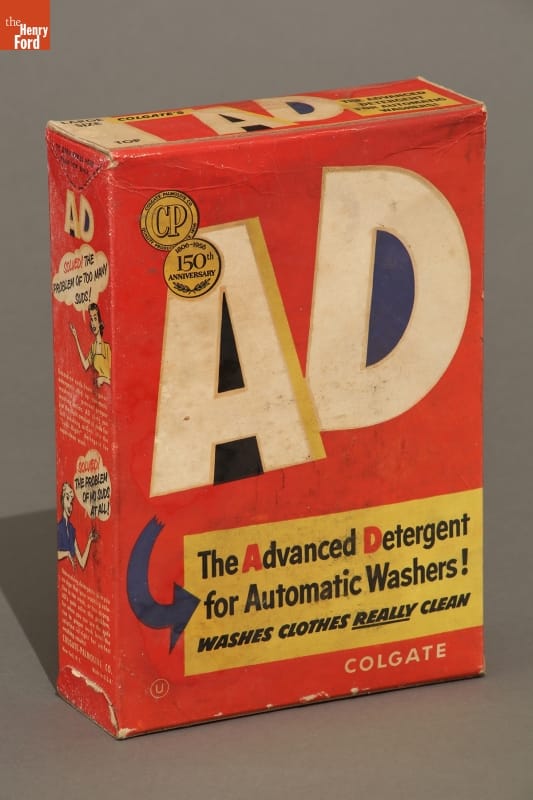
- AD Detergent, circa 1956 -
- circa 1956
- Collections - Artifact
AD Detergent, circa 1956
- 1973 Mazda Ad, "Introducing the Only Rotary Engine Car in America, Mazda" - Mazda introduced its first production rotary engine, based on a design by German engineer Felix Wankel, in Japan in 1967. Instead of conventional reciprocating pistons, the rotary powerplant used an eccentric rotor to convert internal combustion power into motion. Mazda brought its rotary engine to the American market for 1974. Though compact and lightweight, rotary engines tended to be less fuel efficient.

- December 01, 1972
- Collections - Artifact
1973 Mazda Ad, "Introducing the Only Rotary Engine Car in America, Mazda"
Mazda introduced its first production rotary engine, based on a design by German engineer Felix Wankel, in Japan in 1967. Instead of conventional reciprocating pistons, the rotary powerplant used an eccentric rotor to convert internal combustion power into motion. Mazda brought its rotary engine to the American market for 1974. Though compact and lightweight, rotary engines tended to be less fuel efficient.
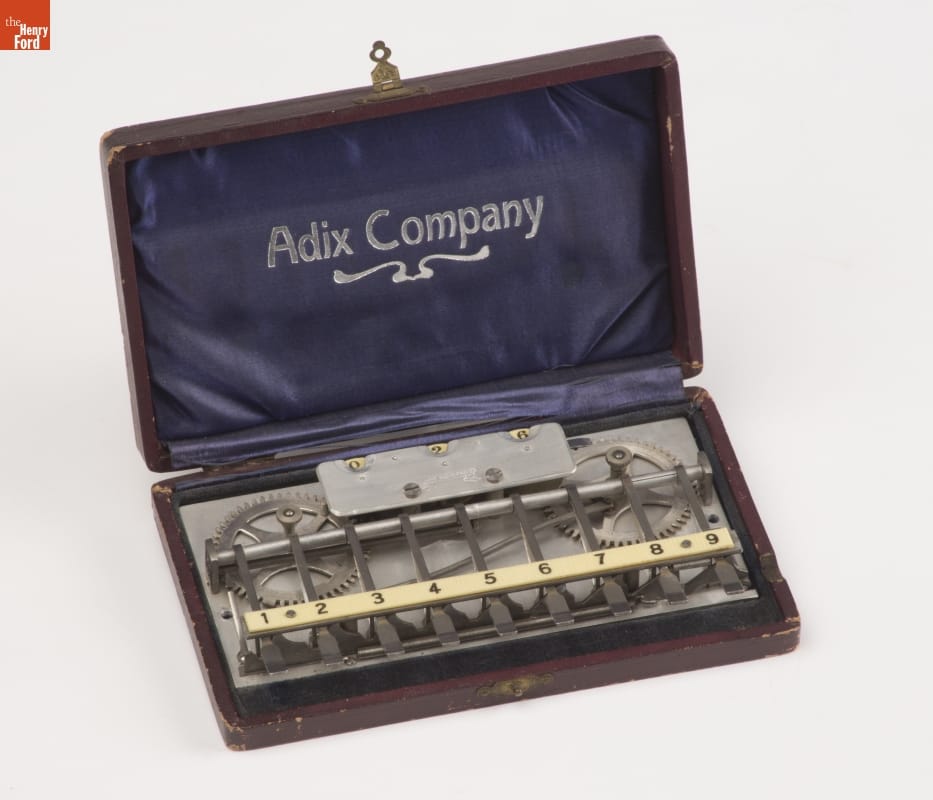
- Adix Adding Machine, 1903-1930 - The Adix adding machine provided fast, accurate calculations for single-column sums. Josef Pallweber patented the machine in 1903, and in 1904, the newly formed Adix Company began production of this small, convenient device with its exposed system of gears. Adix adding machines would remain in production for the next 26 years.
- 1903-1930
- Collections - Artifact
Adix Adding Machine, 1903-1930
The Adix adding machine provided fast, accurate calculations for single-column sums. Josef Pallweber patented the machine in 1903, and in 1904, the newly formed Adix Company began production of this small, convenient device with its exposed system of gears. Adix adding machines would remain in production for the next 26 years.
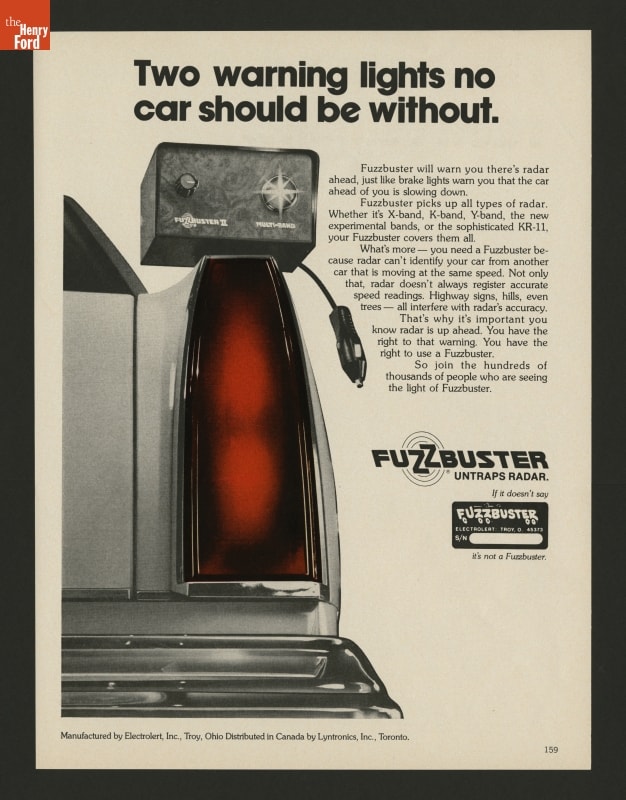
- Fuzzbuster Radar Detector Ad, 1978 - This 1978 Fuzzbuster advertisement equates the warning light of the Fuzzbuster with a car's taillight. Both are signals alerting motorists to slow down. The device warned speeding drivers of police radar being used up ahead.
- 1978
- Collections - Artifact
Fuzzbuster Radar Detector Ad, 1978
This 1978 Fuzzbuster advertisement equates the warning light of the Fuzzbuster with a car's taillight. Both are signals alerting motorists to slow down. The device warned speeding drivers of police radar being used up ahead.
- Calvin Klein Jeans Ad, 1984 - In the 1980s and 1990s, an expanding economy encouraged Americans to buy upscale goods. Ordinary blue jeans would no longer do. Stylish jeans with a prestigious designer label prominently displayed were what many wanted. Designer jeans were more expensive than traditional brands, but many shoppers were willing to spend more money on goods that were emotionally important to them.

- February 01, 1984
- Collections - Artifact
Calvin Klein Jeans Ad, 1984
In the 1980s and 1990s, an expanding economy encouraged Americans to buy upscale goods. Ordinary blue jeans would no longer do. Stylish jeans with a prestigious designer label prominently displayed were what many wanted. Designer jeans were more expensive than traditional brands, but many shoppers were willing to spend more money on goods that were emotionally important to them.
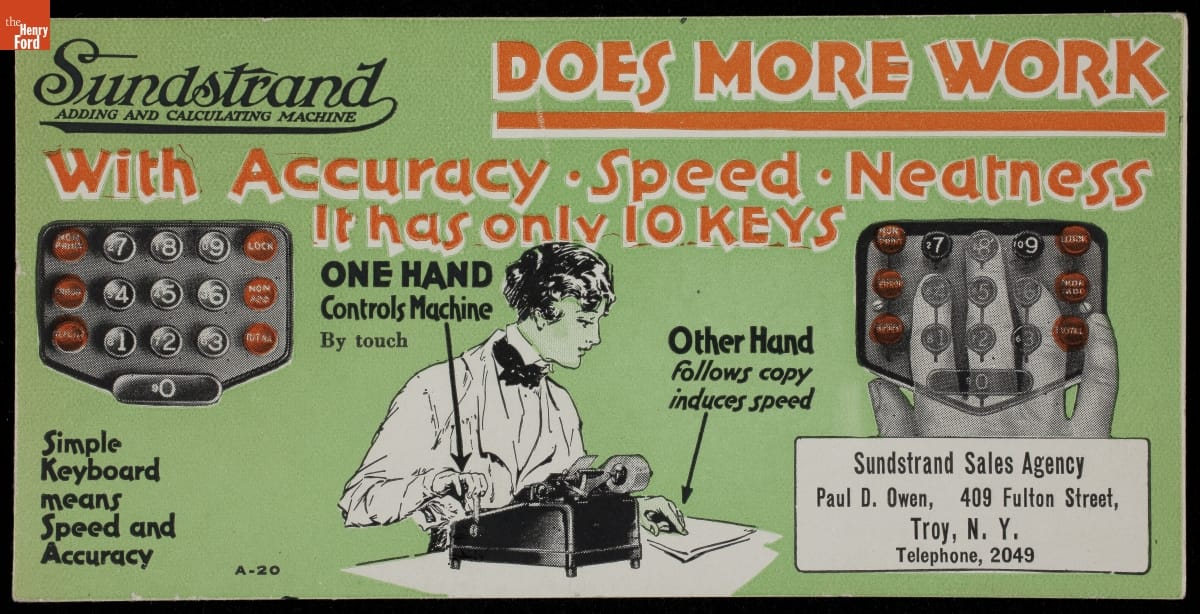
- Trade Card for Sundstrand Adding and Calculating Machine, Sundstrand Adding Machine Co., circa 1920 - Writing with a quill, metal nib or fountain pen could be messy. Ink could smear or smudge with the slightest touch. In America by the late 1800s absorbent paper blotters became the preferred method to soak up wet ink. Companies produced small inexpensive blotters as advertisements and giveaways well into the twentieth century.
- circa 1920
- Collections - Artifact
Trade Card for Sundstrand Adding and Calculating Machine, Sundstrand Adding Machine Co., circa 1920
Writing with a quill, metal nib or fountain pen could be messy. Ink could smear or smudge with the slightest touch. In America by the late 1800s absorbent paper blotters became the preferred method to soak up wet ink. Companies produced small inexpensive blotters as advertisements and giveaways well into the twentieth century.
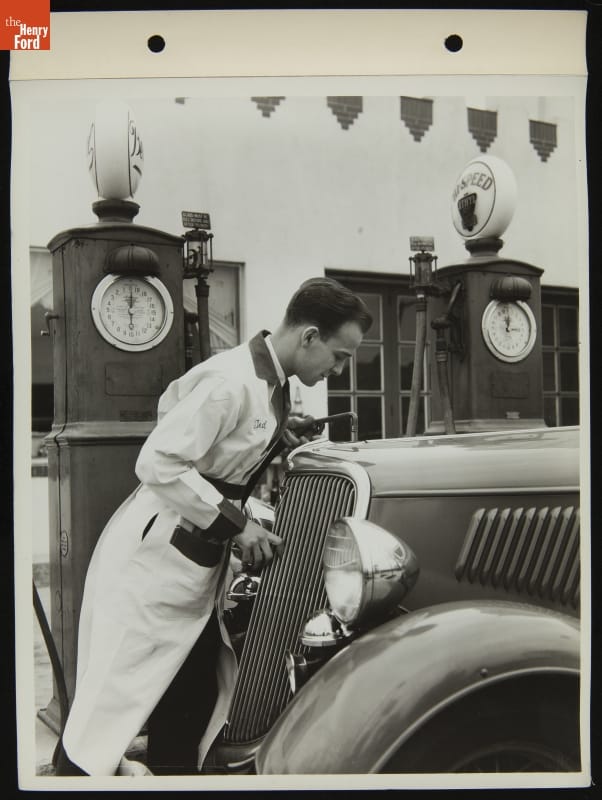
- Service Attendant Adding Water to Radiator of a Ford V-8 Car, April 1935 - The first uniformed gas station attendants appeared around 1914. Attendants worked long hours in all weather, possessed a thorough knowledge of service requirements for various automobile makes and models, improvised quick repairs on the spot, provided directions to lost travelers, and did it all with a smile. Attendants disappeared with the widespread adoption of self-service pumps in the 1970s.
- April 22, 1935
- Collections - Artifact
Service Attendant Adding Water to Radiator of a Ford V-8 Car, April 1935
The first uniformed gas station attendants appeared around 1914. Attendants worked long hours in all weather, possessed a thorough knowledge of service requirements for various automobile makes and models, improvised quick repairs on the spot, provided directions to lost travelers, and did it all with a smile. Attendants disappeared with the widespread adoption of self-service pumps in the 1970s.
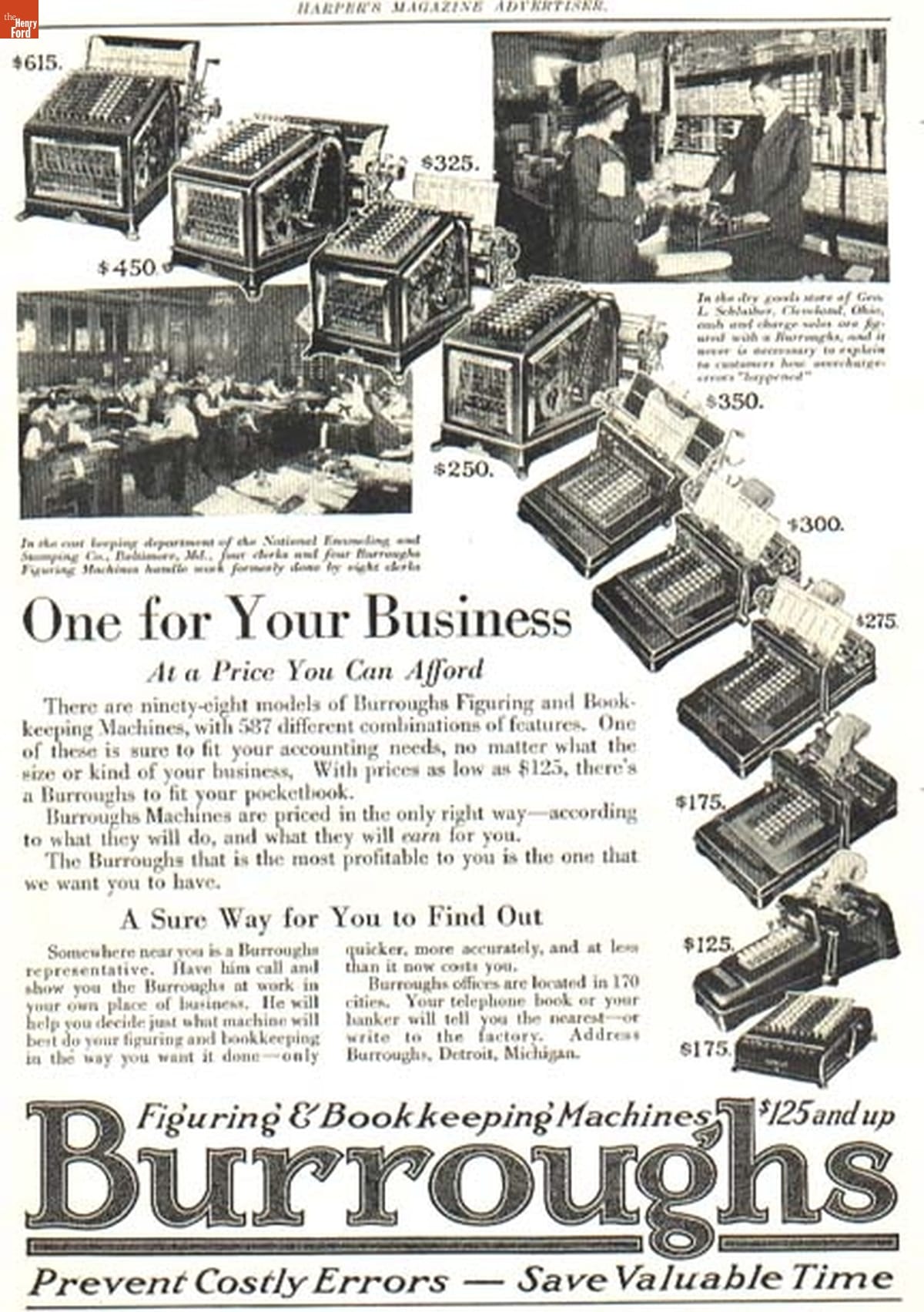
- Burroughs Adding Machine Advertisement, 1915 - William Seward Burroughs and three other co-founders established the American Arithmometer Company in 1886 to produce simple addition and subtraction machines. Over the years, the company--later known as the Burroughs Corporation--innovated and expanded. Mergers with companies such as Moon-Hopkins and Sperry in the 20th century helped Burroughs become a leader in the calculating--and later computing--industry.
- 1915
- Collections - Artifact
Burroughs Adding Machine Advertisement, 1915
William Seward Burroughs and three other co-founders established the American Arithmometer Company in 1886 to produce simple addition and subtraction machines. Over the years, the company--later known as the Burroughs Corporation--innovated and expanded. Mergers with companies such as Moon-Hopkins and Sperry in the 20th century helped Burroughs become a leader in the calculating--and later computing--industry.