
Search
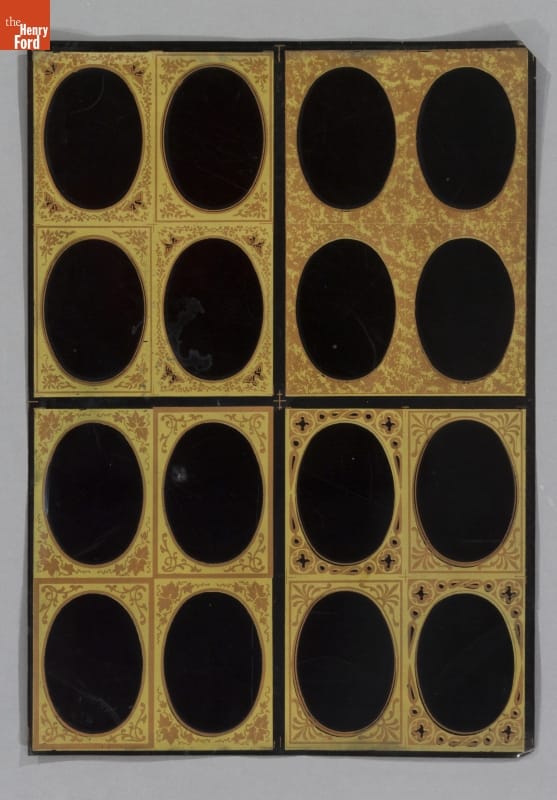
- Unprocessed Tintype Plate -
- Collections - Artifact
Unprocessed Tintype Plate
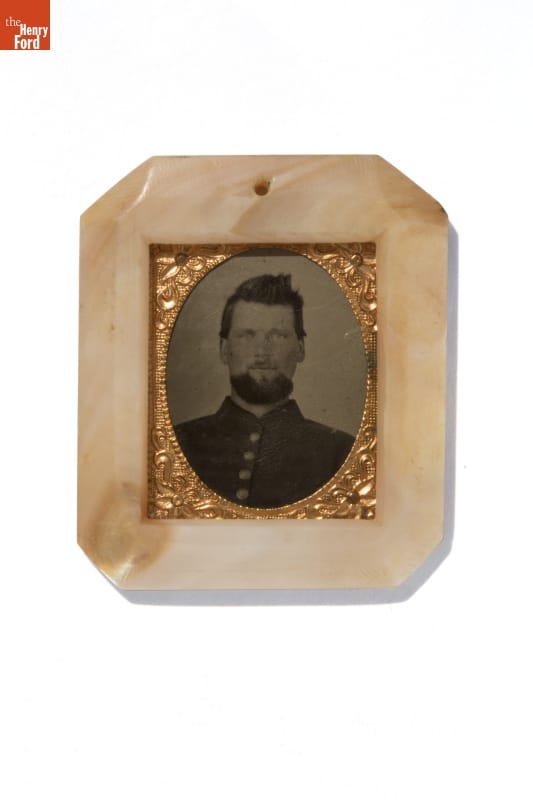
- Tintype Pendant, 1863 - The development of the tintype with its increased durability over daguerreotypes and ambrotypes lent itself to creating mementoes and keepsakes, housed in a variety of cases including jewelry. This particular pendant could be a piece of mourning jewelry or it could have been a keepsake given to a loved one by a soldier going off to war.
- 1863
- Collections - Artifact
Tintype Pendant, 1863
The development of the tintype with its increased durability over daguerreotypes and ambrotypes lent itself to creating mementoes and keepsakes, housed in a variety of cases including jewelry. This particular pendant could be a piece of mourning jewelry or it could have been a keepsake given to a loved one by a soldier going off to war.
- Tintype Stand, circa 1880 -
- circa 1880
- Collections - Artifact
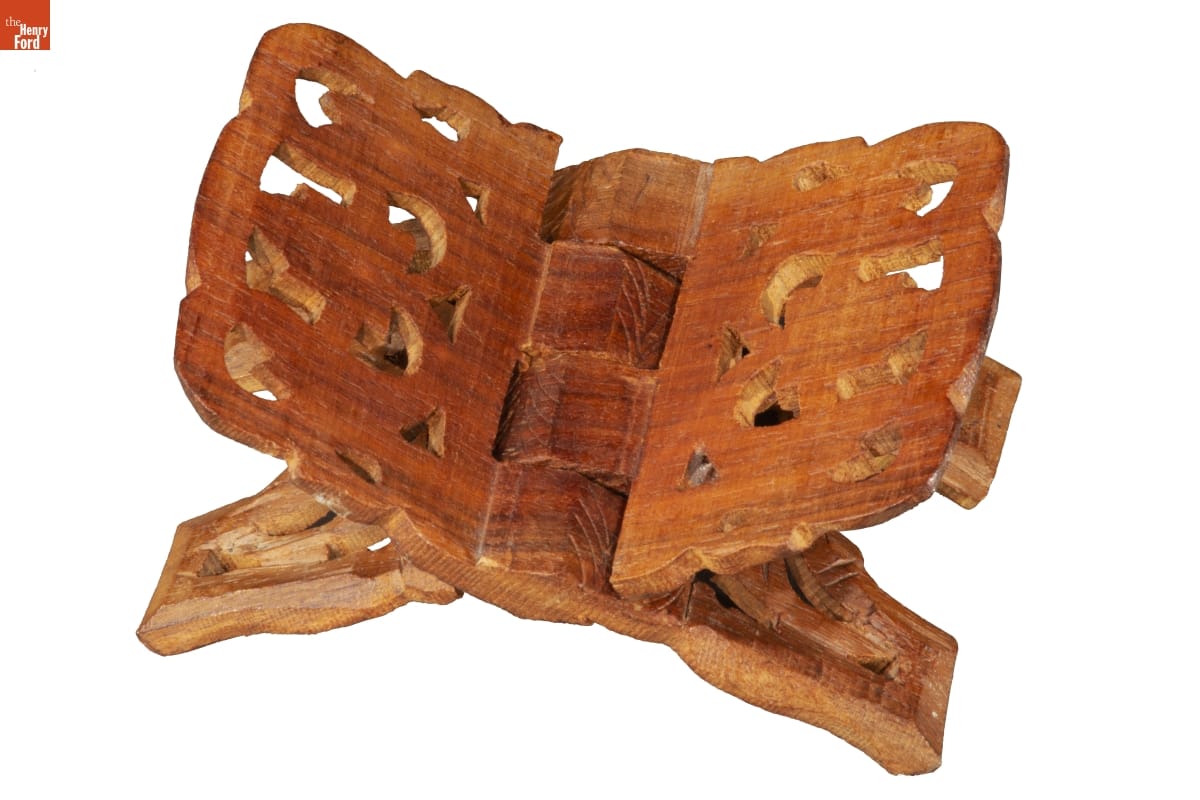
Tintype Stand, circa 1880
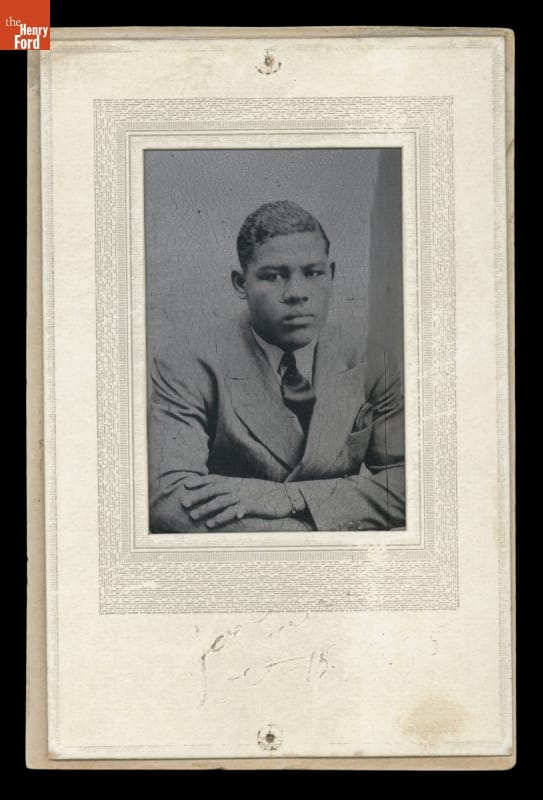
- Tintype of Joe Louis, Taken at the Greenfield Village Tintype Studio, 1935 - Seventeen-year-old Joe Louis got his start as an athlete and boxer in 1931 at the Brewster East Side Gymnasium in Detroit. He became world heavyweight boxing champion in 1937 and held the title until 1949. This autographed tintype of him was taken in Greenfield Village's Tintype Studio during a visit in 1935.
- October 15, 1935
- Collections - Artifact
Tintype of Joe Louis, Taken at the Greenfield Village Tintype Studio, 1935
Seventeen-year-old Joe Louis got his start as an athlete and boxer in 1931 at the Brewster East Side Gymnasium in Detroit. He became world heavyweight boxing champion in 1937 and held the title until 1949. This autographed tintype of him was taken in Greenfield Village's Tintype Studio during a visit in 1935.
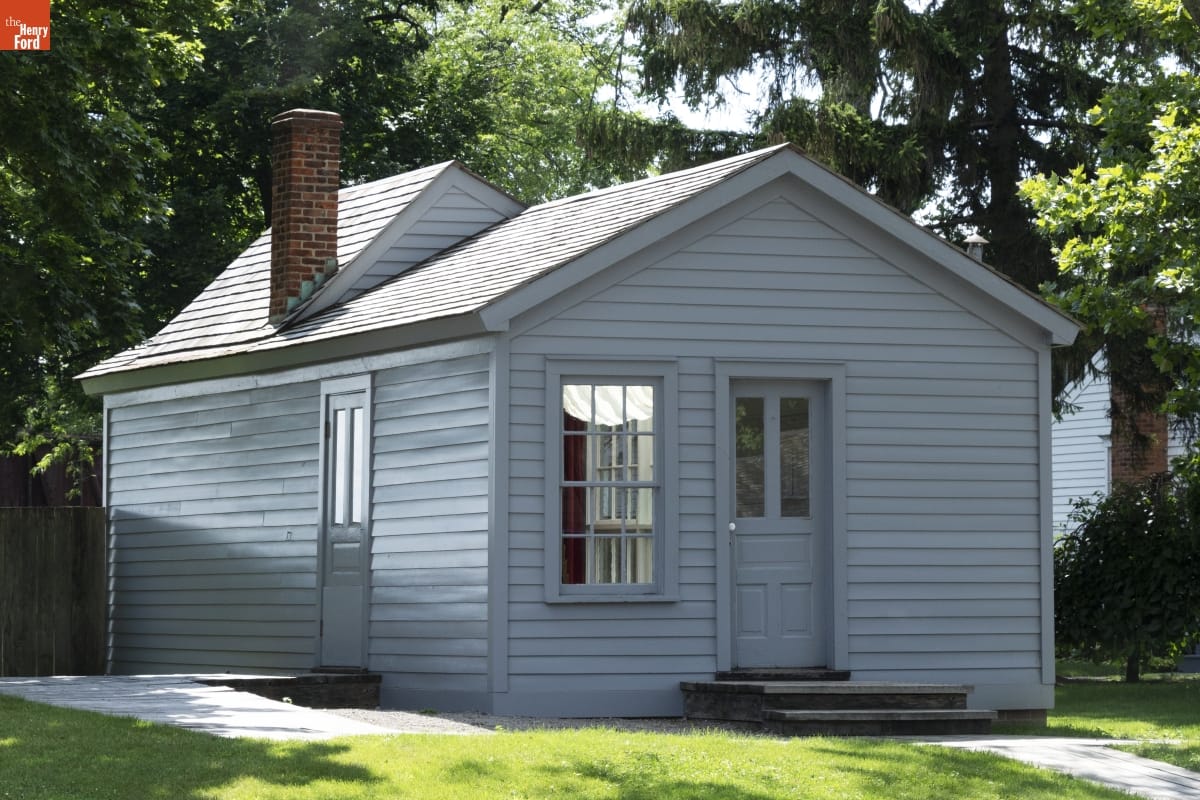
- Greenfield Village Tintype Studio - Tintypes were a popular type of mid-1800s "wet-plate" photography. This studio was built in 1929 in Greenfield Village and a tintypist and Ford Motor Company employee, Charles Tremear, was hired to create tintypes for Greenfield Village visitors. In this studio, in addition to Village visitors, Tremear made portraits of many celebrities, including Thomas Edison, Joe Louis and Walt Disney.
- October 20, 1929
- Collections - Artifact
Greenfield Village Tintype Studio
Tintypes were a popular type of mid-1800s "wet-plate" photography. This studio was built in 1929 in Greenfield Village and a tintypist and Ford Motor Company employee, Charles Tremear, was hired to create tintypes for Greenfield Village visitors. In this studio, in addition to Village visitors, Tremear made portraits of many celebrities, including Thomas Edison, Joe Louis and Walt Disney.
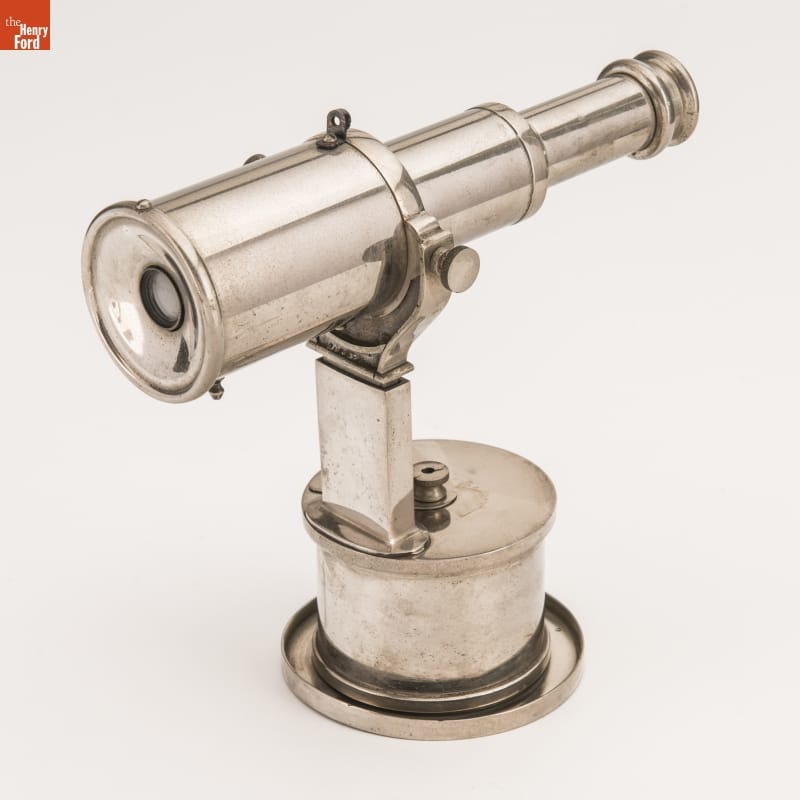
- Button Tintype Camera, 1900-1920 -
- 1900-1920
- Collections - Artifact
Button Tintype Camera, 1900-1920
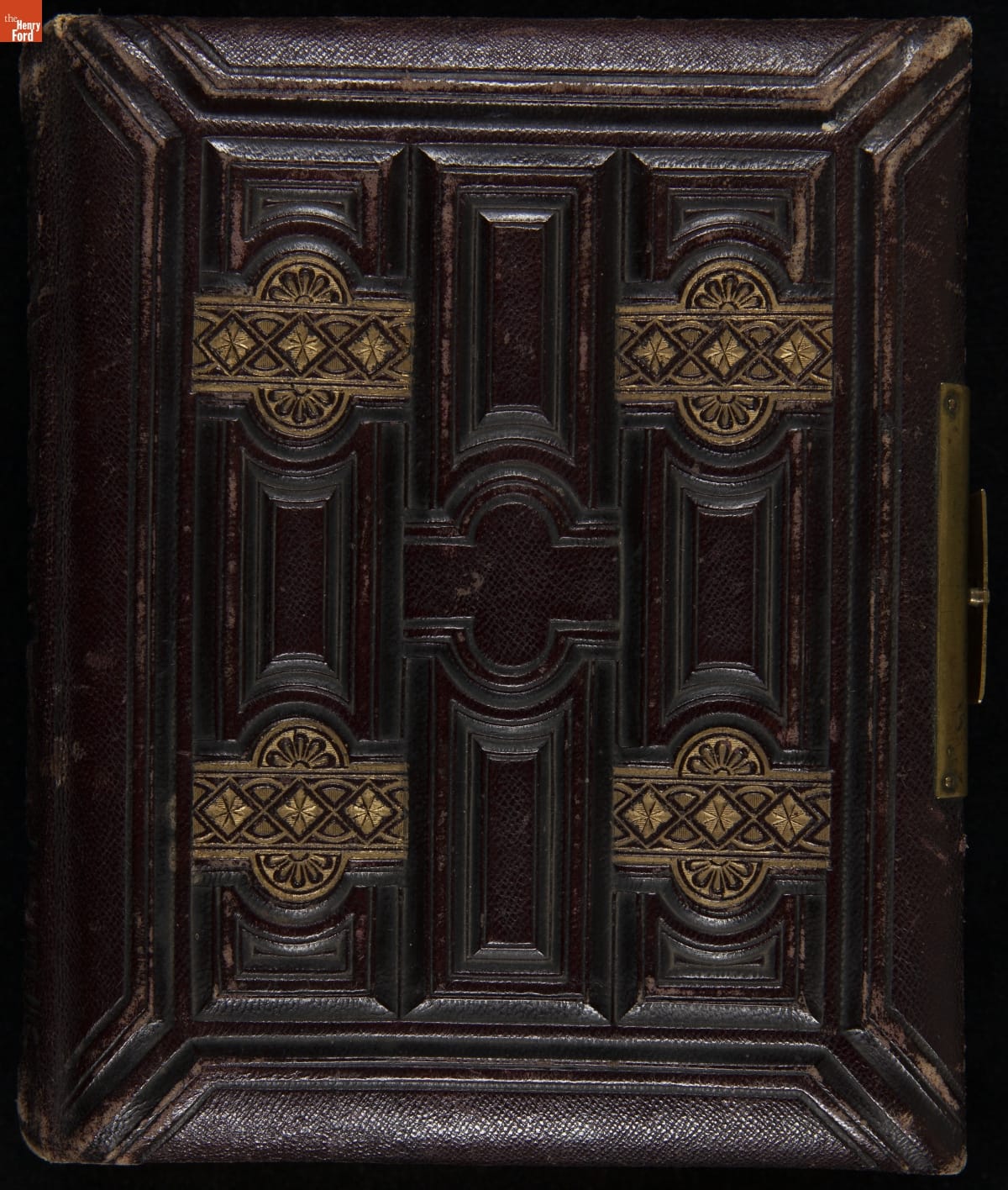
- Photograph Album of Tintypes, 1882 -
- circa 1882
- Collections - Artifact
Photograph Album of Tintypes, 1882
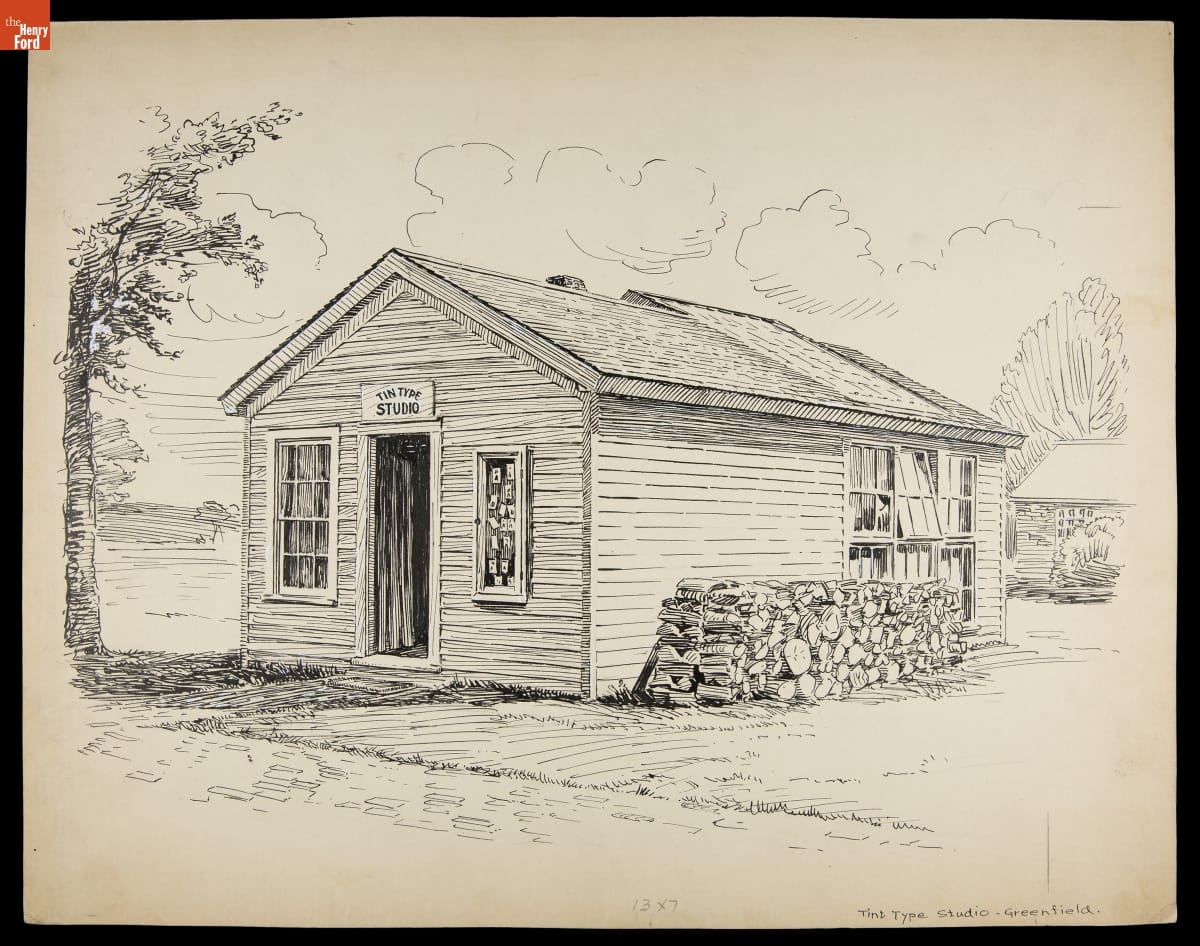
- Greenfield Village Tintype Studio, circa 1934 - Irving Bacon, a Ford Motor Company employee and Henry Ford's personal artist, created pen-and-ink drawings to illustrate guidebooks for the Edison Institute Museum and Greenfield Village (now The Henry Ford) when they officially opened to the public in 1933. An illustrated souvenir guidebook helped visitors navigate the exhibits and grounds. Ford also used these drawings in other company publications.
- circa 1934
- Collections - Artifact
Greenfield Village Tintype Studio, circa 1934
Irving Bacon, a Ford Motor Company employee and Henry Ford's personal artist, created pen-and-ink drawings to illustrate guidebooks for the Edison Institute Museum and Greenfield Village (now The Henry Ford) when they officially opened to the public in 1933. An illustrated souvenir guidebook helped visitors navigate the exhibits and grounds. Ford also used these drawings in other company publications.
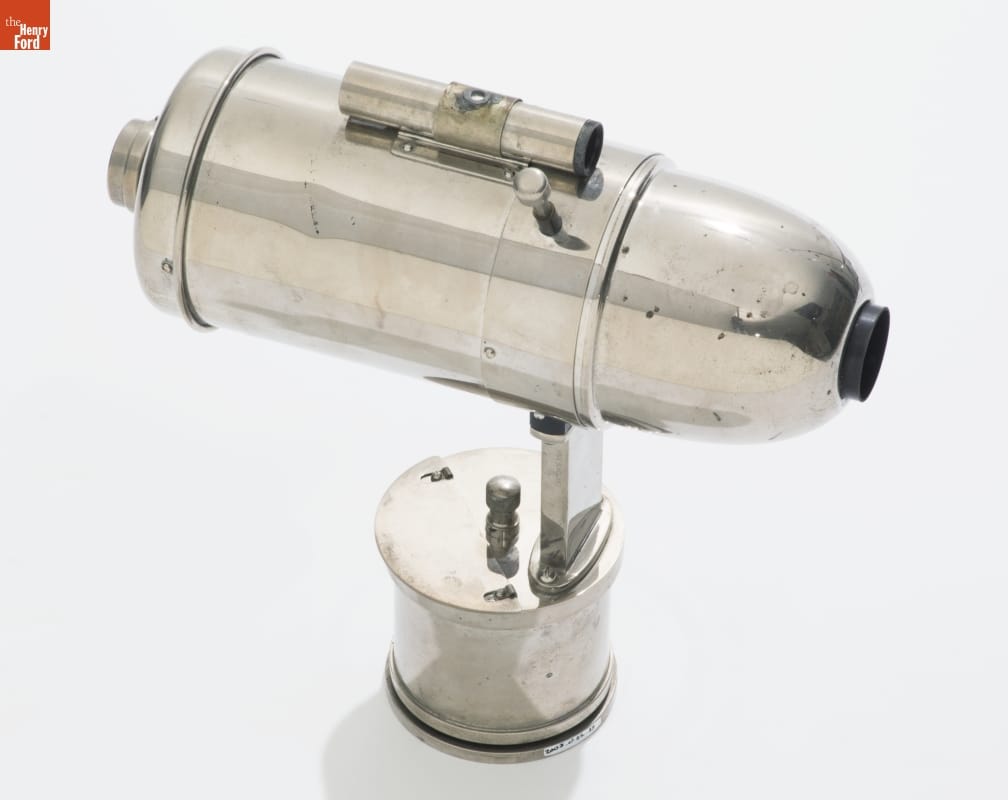
- Errtee Button Tintype Camera, circa 1912 -
- circa 1912
- Collections - Artifact
Errtee Button Tintype Camera, circa 1912
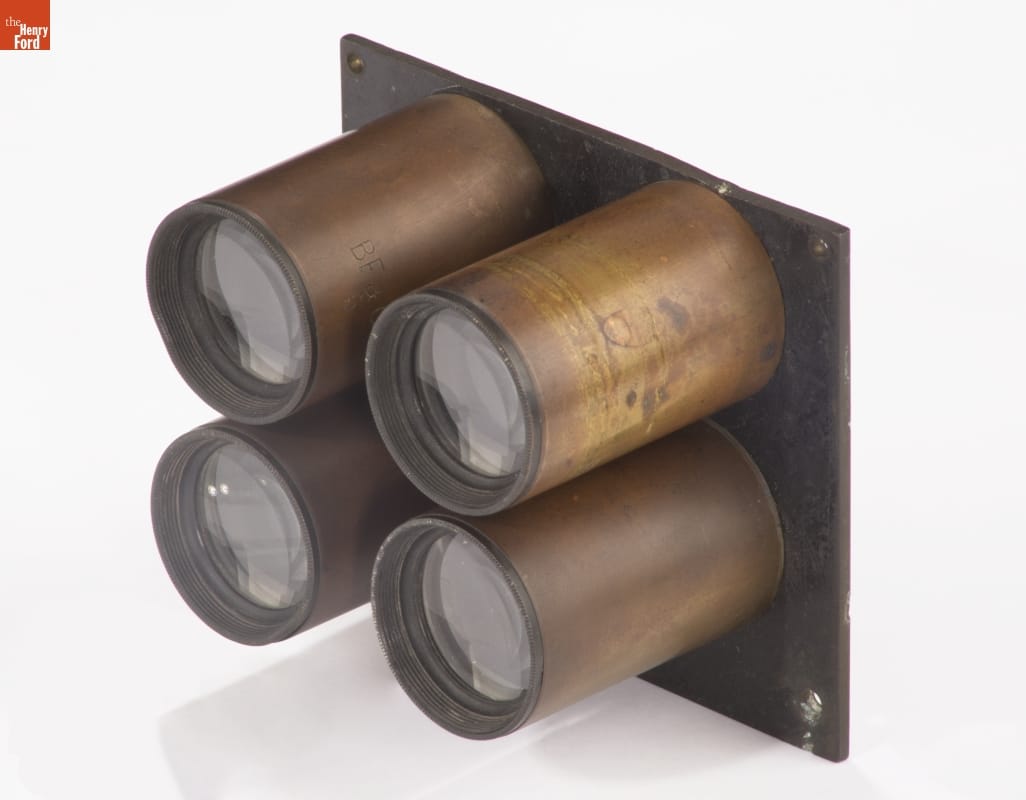
- Benjamin French Tintype Camera Lens, 1860-1890 - Tintype photographs peaked in popularity in the mid-19th century. Lacquered iron plates coated with light-sensitive collodion were exposed in cameras by photographers in formal studios and mobile booths at fairs. Tintypes were inexpensive and could be produced in minutes--"instant photographs" of their day. This lens could make multiple identical exposures of the same image onto one tintype plate.
- 1860-1890
- Collections - Artifact
Benjamin French Tintype Camera Lens, 1860-1890
Tintype photographs peaked in popularity in the mid-19th century. Lacquered iron plates coated with light-sensitive collodion were exposed in cameras by photographers in formal studios and mobile booths at fairs. Tintypes were inexpensive and could be produced in minutes--"instant photographs" of their day. This lens could make multiple identical exposures of the same image onto one tintype plate.