
Search
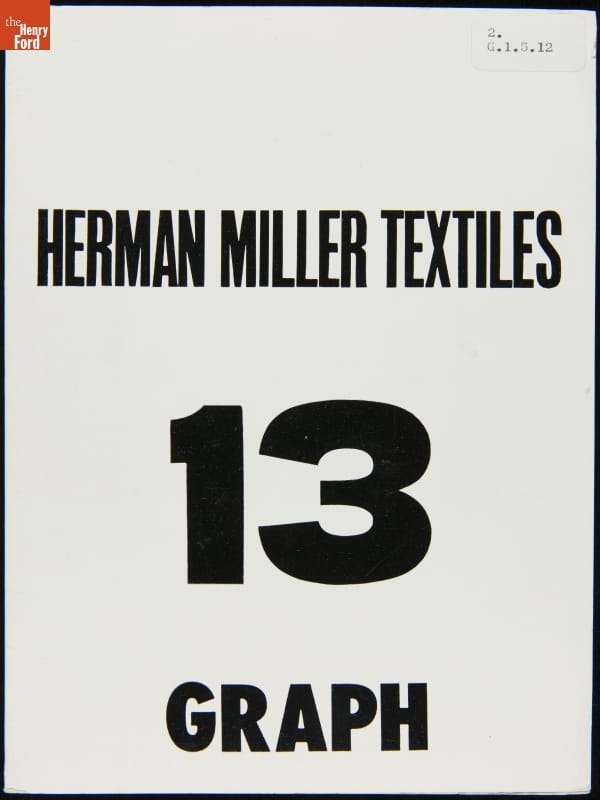
- Herman Miller Textiles Swatches, "13 Graph," 1964 - Early modernist design was starkly minimal, but mid-century modern designer Alexander Girard's work challenged and expanded the movement. Girard humanized modernism through his colorful and whimsical textile, furniture, graphic, and interior designs. As the Director of Design in Herman Miller's Textile Division from 1952 until 1973, Girard designed over 300 textiles, often using bold color combinations and abstract patterns.
- 1964
- Collections - Artifact
Herman Miller Textiles Swatches, "13 Graph," 1964
Early modernist design was starkly minimal, but mid-century modern designer Alexander Girard's work challenged and expanded the movement. Girard humanized modernism through his colorful and whimsical textile, furniture, graphic, and interior designs. As the Director of Design in Herman Miller's Textile Division from 1952 until 1973, Girard designed over 300 textiles, often using bold color combinations and abstract patterns.
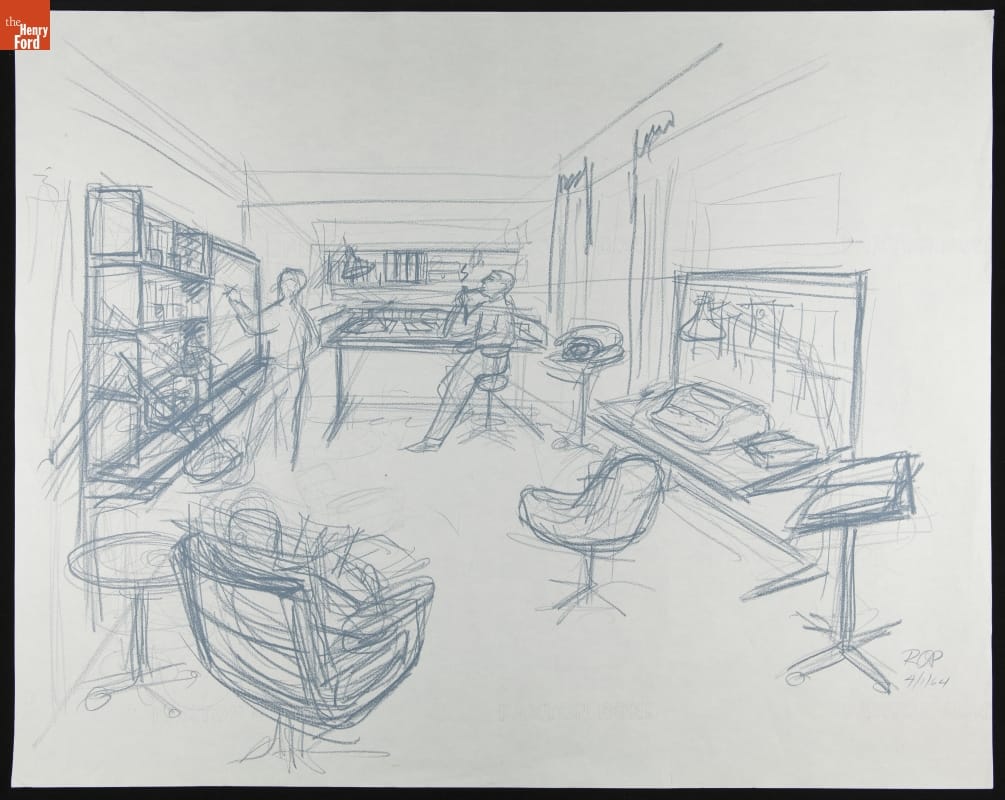
- Action Office Project Drawing by Robert Propst, April 1, 1964 - Action Office, conceptualized by Robert Propst with final design by George Nelson, was rooted in Propst's research into office function and worker behavior. The system was not a commercial success: manufacturing costs were high, and it was, in Propst's words, "too showy and bright for serious consideration as a middle management tool." Propst went on to design the hugely successful Action Office 2 cubicle-based system.
- April 01, 1964
- Collections - Artifact
Action Office Project Drawing by Robert Propst, April 1, 1964
Action Office, conceptualized by Robert Propst with final design by George Nelson, was rooted in Propst's research into office function and worker behavior. The system was not a commercial success: manufacturing costs were high, and it was, in Propst's words, "too showy and bright for serious consideration as a middle management tool." Propst went on to design the hugely successful Action Office 2 cubicle-based system.
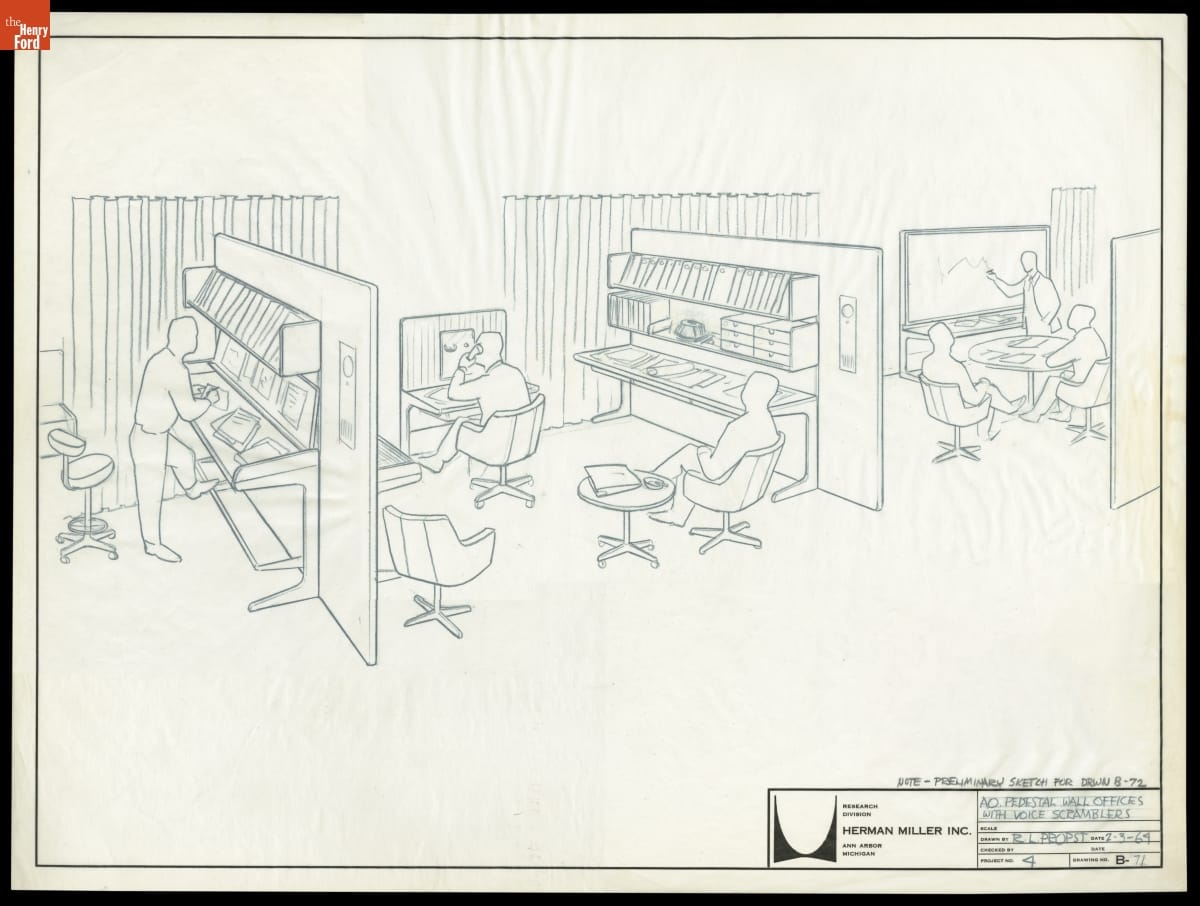
- Herman Miller Action Office Concept Drawing, "Action Office Pedestal Wall Offices with Voice Scramblers," February 3, 1964 -
- February 03, 1964
- Collections - Artifact
Herman Miller Action Office Concept Drawing, "Action Office Pedestal Wall Offices with Voice Scramblers," February 3, 1964
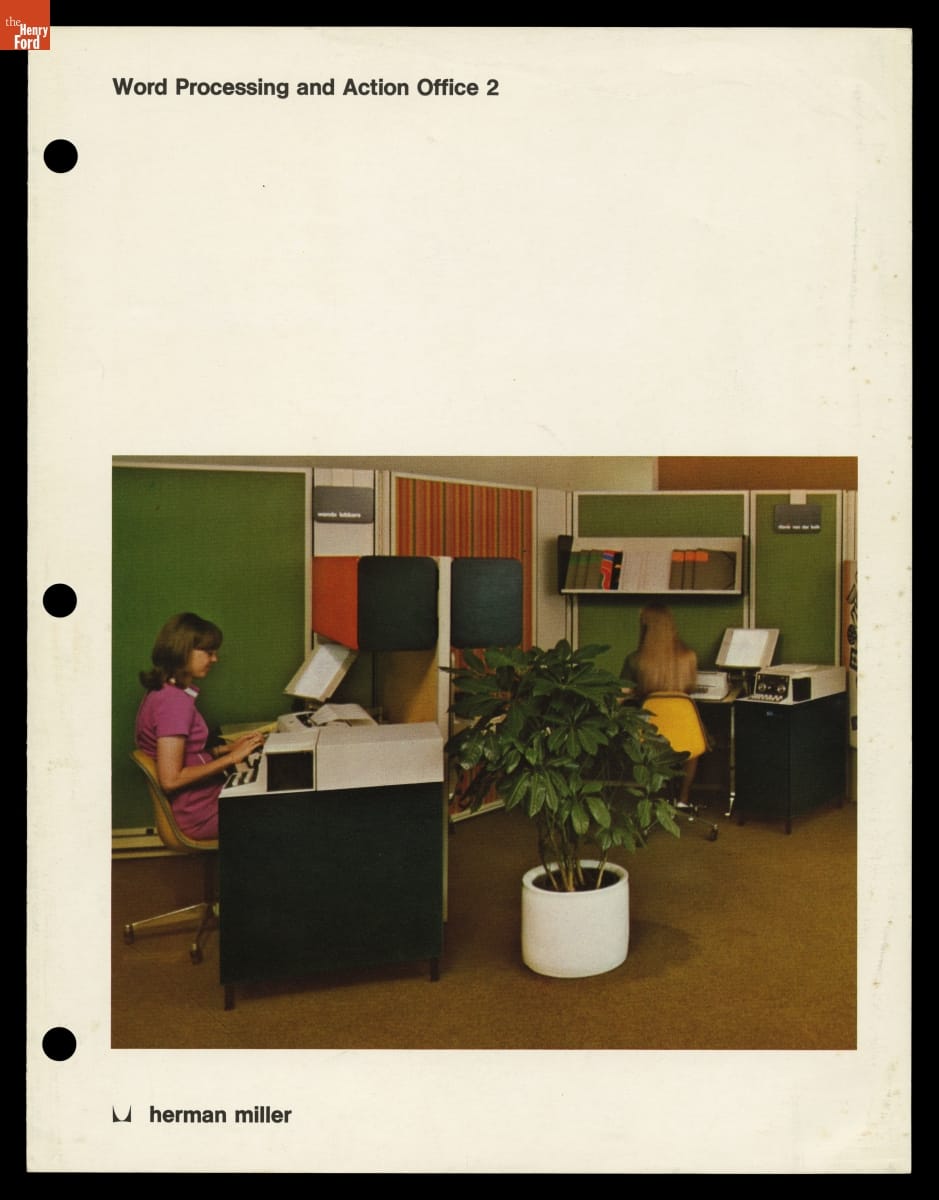
- Herman Miller Brochure, "Word Processing and Action Office 2," 1972 -
- 1972
- Collections - Artifact
Herman Miller Brochure, "Word Processing and Action Office 2," 1972
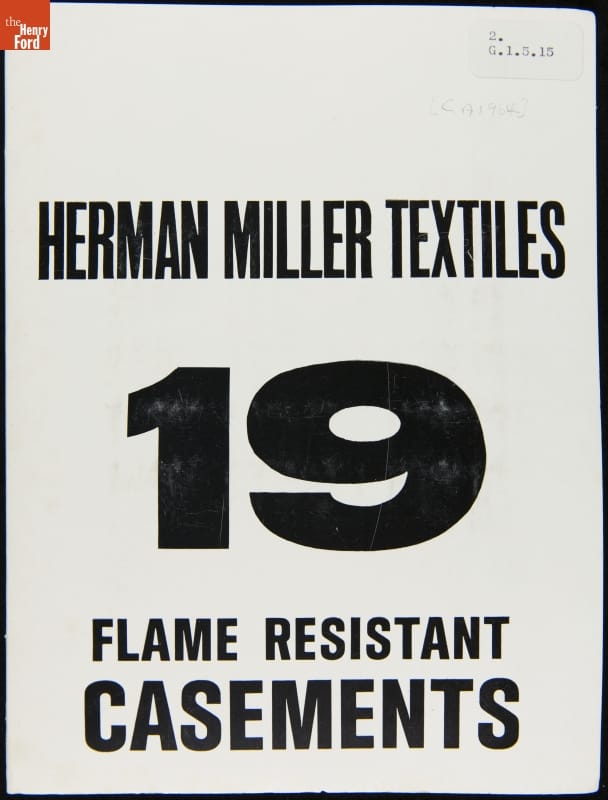
- Herman Miller Textiles Swatches, "19 Flame Resistant Casements," 1964 - Early modernist design was starkly minimal, but mid-century modern designer Alexander Girard's work challenged and expanded the movement. Girard humanized modernism through his colorful and whimsical textile, furniture, graphic, and interior designs. As the Director of Design in Herman Miller's Textile Division from 1952 until 1973, Girard designed over 300 textiles, often using bold color combinations and abstract patterns.
- 1964
- Collections - Artifact
Herman Miller Textiles Swatches, "19 Flame Resistant Casements," 1964
Early modernist design was starkly minimal, but mid-century modern designer Alexander Girard's work challenged and expanded the movement. Girard humanized modernism through his colorful and whimsical textile, furniture, graphic, and interior designs. As the Director of Design in Herman Miller's Textile Division from 1952 until 1973, Girard designed over 300 textiles, often using bold color combinations and abstract patterns.
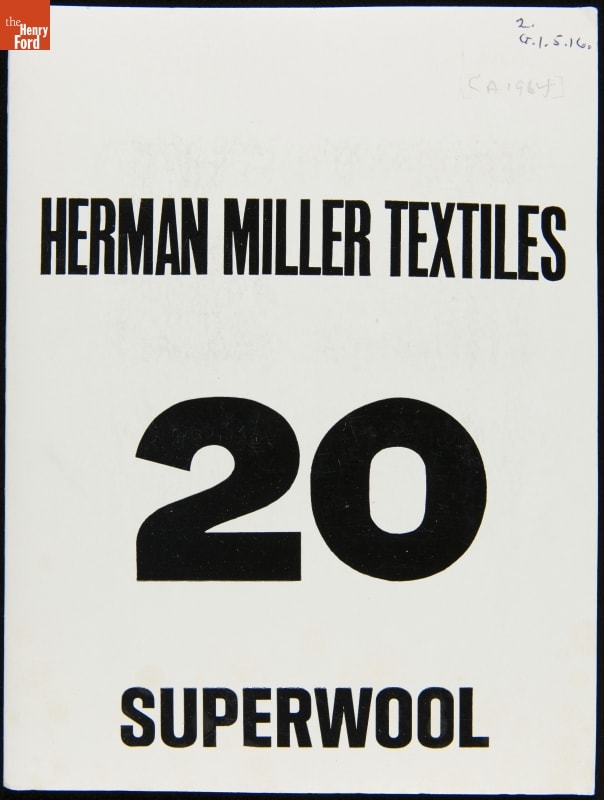
- Herman Miller Textiles Swatches, "20 Super Wool," 1964 - Early modernist design was starkly minimal, but mid-century modern designer Alexander Girard's work challenged and expanded the movement. Girard humanized modernism through his colorful and whimsical textile, furniture, graphic, and interior designs. As the Director of Design in Herman Miller's Textile Division from 1952 until 1973, Girard designed over 300 textiles, often using bold color combinations and abstract patterns.
- 1964
- Collections - Artifact
Herman Miller Textiles Swatches, "20 Super Wool," 1964
Early modernist design was starkly minimal, but mid-century modern designer Alexander Girard's work challenged and expanded the movement. Girard humanized modernism through his colorful and whimsical textile, furniture, graphic, and interior designs. As the Director of Design in Herman Miller's Textile Division from 1952 until 1973, Girard designed over 300 textiles, often using bold color combinations and abstract patterns.
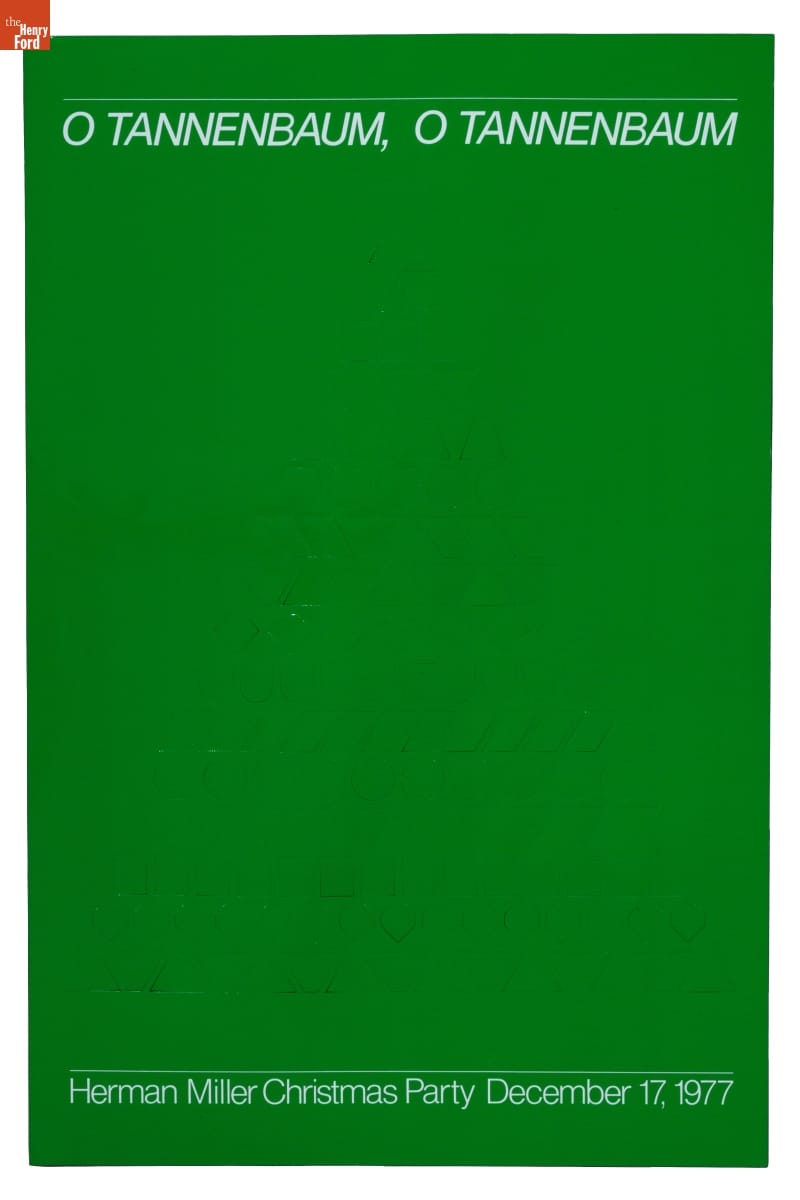
- Herman Miller Christmas Party Poster, "O Tannenbaum," December 17, 1977 - Linda Powell began designing posters for the Herman Miller Christmas Party in 1976, the same year she was hired at the company as an internal graphic designer. She designed eight Christmas Party posters over four years. The 1977 Party theme was "German Christmas," so Powell featured the German Christmas song "O Tannenbaum" ("O Christmas Tree") with a tree made of 3-dimensional die cut ornaments.
- December 17, 1977
- Collections - Artifact
Herman Miller Christmas Party Poster, "O Tannenbaum," December 17, 1977
Linda Powell began designing posters for the Herman Miller Christmas Party in 1976, the same year she was hired at the company as an internal graphic designer. She designed eight Christmas Party posters over four years. The 1977 Party theme was "German Christmas," so Powell featured the German Christmas song "O Tannenbaum" ("O Christmas Tree") with a tree made of 3-dimensional die cut ornaments.
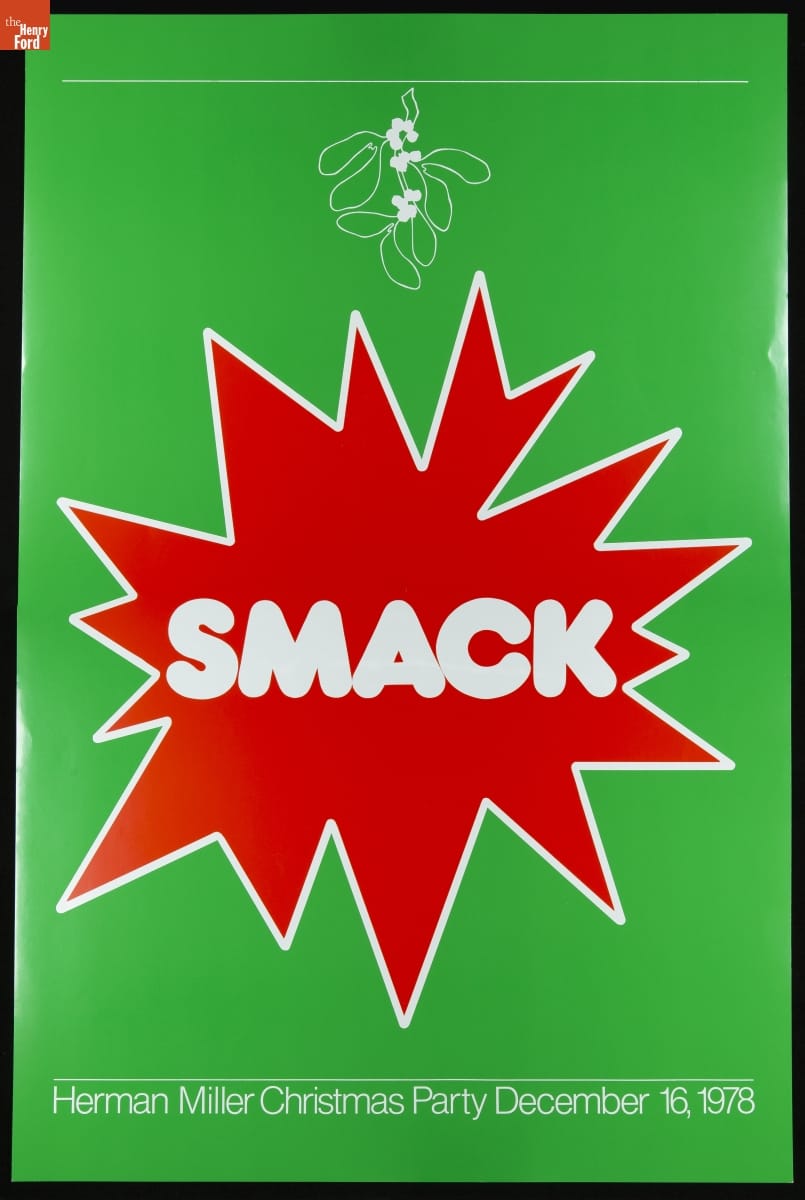
- Herman Miller Christmas Party Poster, "Smack," December 16, 1978 - Linda Powell began designing posters for the Herman Miller Christmas Party in 1976, the same year she was hired at the company as an internal graphic designer. She designed eight Christmas Party posters over four years, four of them for the 1978 Party's "Sounds of Christmas" theme. Each poster focused on a particular sound -- "Ho Ho Ho," "Fa la la la la," "Smack," and "Jingle."
- December 16, 1978
- Collections - Artifact
Herman Miller Christmas Party Poster, "Smack," December 16, 1978
Linda Powell began designing posters for the Herman Miller Christmas Party in 1976, the same year she was hired at the company as an internal graphic designer. She designed eight Christmas Party posters over four years, four of them for the 1978 Party's "Sounds of Christmas" theme. Each poster focused on a particular sound -- "Ho Ho Ho," "Fa la la la la," "Smack," and "Jingle."
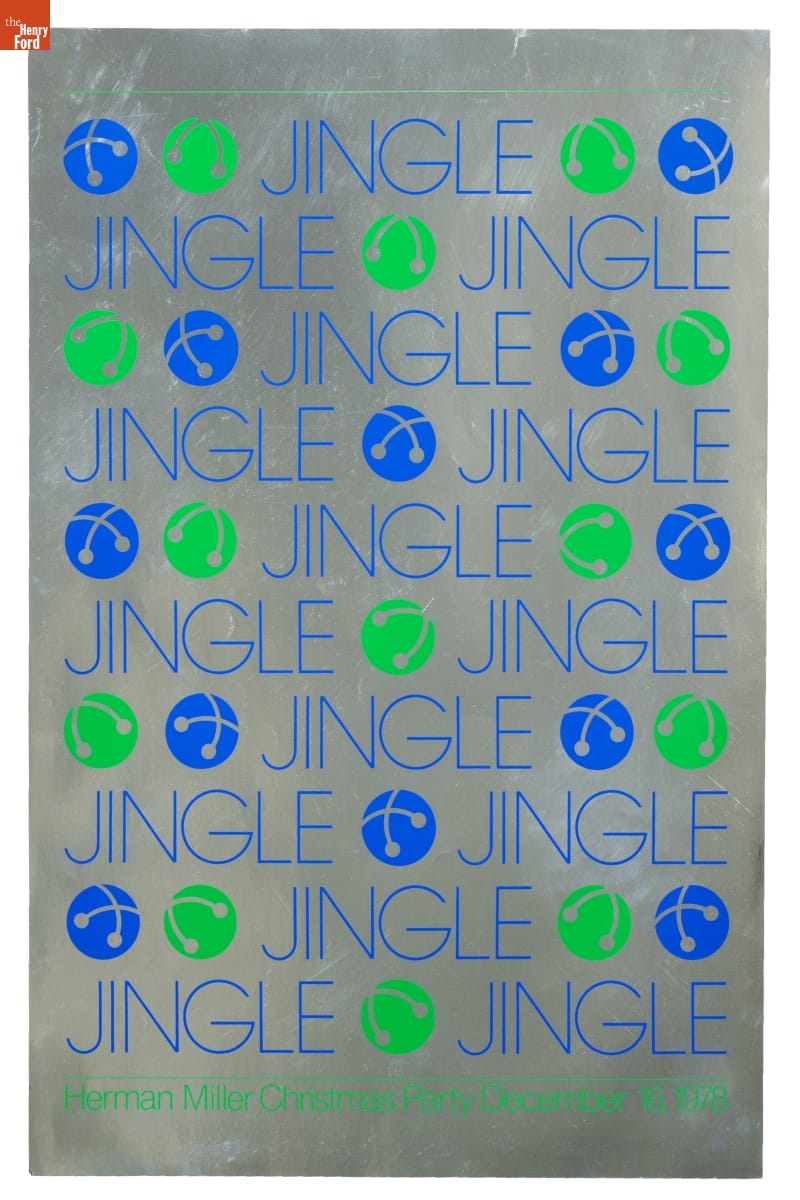
- Herman Miller Christmas Party Poster, "Jingle," December 16, 1978 - Linda Powell began designing posters for the Herman Miller Christmas Party in 1976, the same year she was hired at the company as an internal graphic designer. She designed eight Christmas Party posters over four years, four of them for the 1978 Party's "Sounds of Christmas" theme. Each poster focused on a particular sound -- "Ho Ho Ho," "Fa la la la la," "Smack," and "Jingle."
- December 16, 1978
- Collections - Artifact
Herman Miller Christmas Party Poster, "Jingle," December 16, 1978
Linda Powell began designing posters for the Herman Miller Christmas Party in 1976, the same year she was hired at the company as an internal graphic designer. She designed eight Christmas Party posters over four years, four of them for the 1978 Party's "Sounds of Christmas" theme. Each poster focused on a particular sound -- "Ho Ho Ho," "Fa la la la la," "Smack," and "Jingle."
- Herman Miller Picnic Poster, "Ring Toss," 1990 - In 1990, Herman Miller graphic designer Kathy Stanton took over the reins from Steve Frykholm to design the poster for the furniture company's annual employee summer picnic. While Frykholm's picnic posters focused on the food at the picnic, Stanton's designs were inspired by the activities available to the employees and their families. Stanton would design 11 picnic posters, one each year until 2000.

- 1990
- Collections - Artifact
Herman Miller Picnic Poster, "Ring Toss," 1990
In 1990, Herman Miller graphic designer Kathy Stanton took over the reins from Steve Frykholm to design the poster for the furniture company's annual employee summer picnic. While Frykholm's picnic posters focused on the food at the picnic, Stanton's designs were inspired by the activities available to the employees and their families. Stanton would design 11 picnic posters, one each year until 2000.