
Search
- Polishing Iron -
- Collections - Artifact
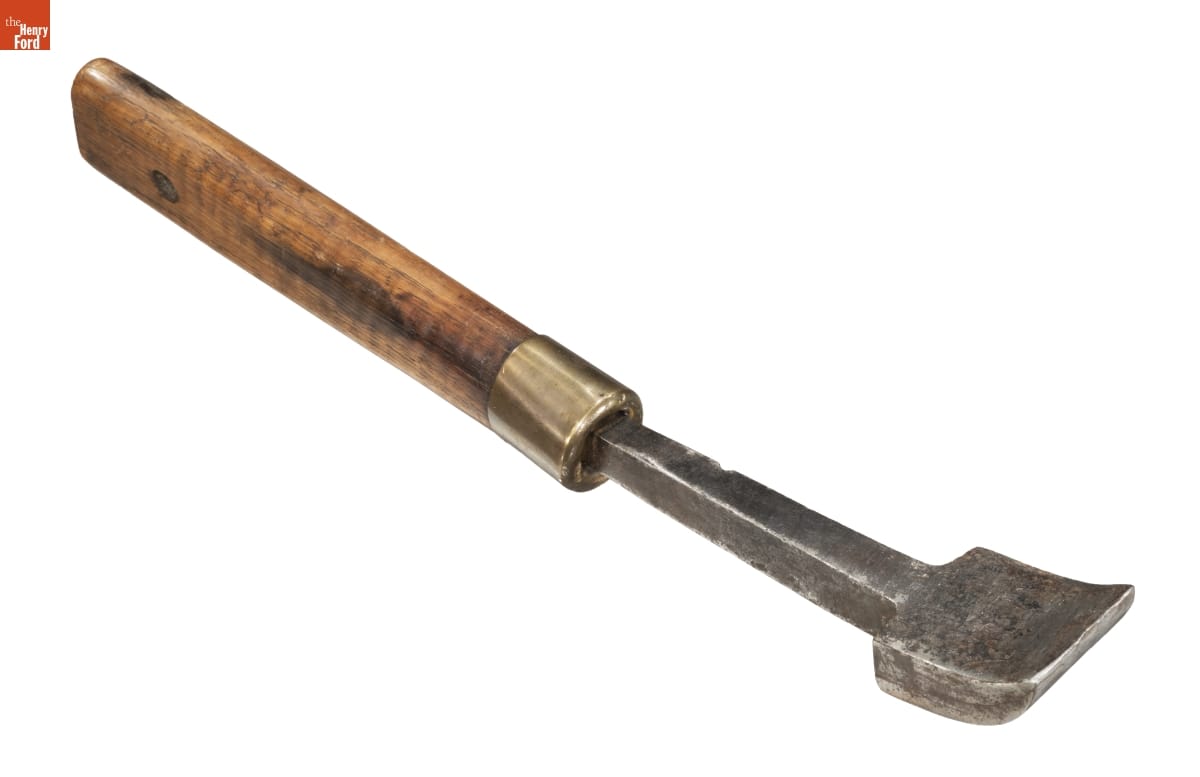
Polishing Iron
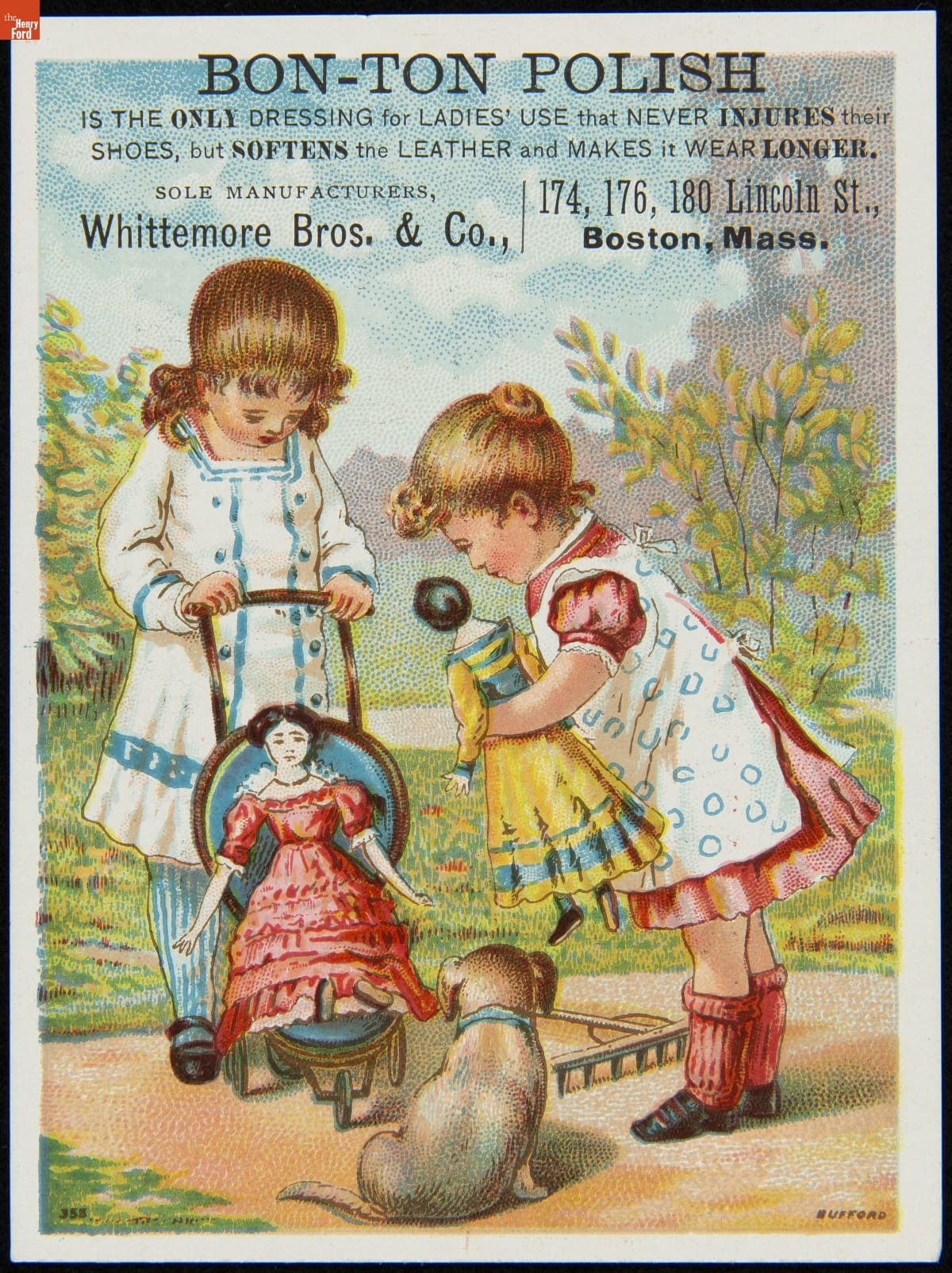
- Trade Card for Bon-Ton Shoe Polish, Whittemore Bros. & Co., 1880-1900 - In the last third of the nineteenth century, an unprecedented variety of consumer goods and services flooded the American market. Advertisers, armed with new methods of color printing, bombarded potential customers with trade cards. Americans enjoyed and often saved the vibrant little advertisements found in product packages or distributed by local merchants. Many survive as historical records of commercialism in the United States.
- 1880-1900
- Collections - Artifact
Trade Card for Bon-Ton Shoe Polish, Whittemore Bros. & Co., 1880-1900
In the last third of the nineteenth century, an unprecedented variety of consumer goods and services flooded the American market. Advertisers, armed with new methods of color printing, bombarded potential customers with trade cards. Americans enjoyed and often saved the vibrant little advertisements found in product packages or distributed by local merchants. Many survive as historical records of commercialism in the United States.
- Trade Card for Bon-Ton Shoe Polish, Whittemore Bros. & Co., 1880-1900 - In the last third of the nineteenth century, an unprecedented variety of consumer goods and services flooded the American market. Advertisers, armed with new methods of color printing, bombarded potential customers with trade cards. Americans enjoyed and often saved the vibrant little advertisements found in product packages or distributed by local merchants. Many survive as historical records of commercialism in the United States.
- 1880-1900
- Collections - Artifact
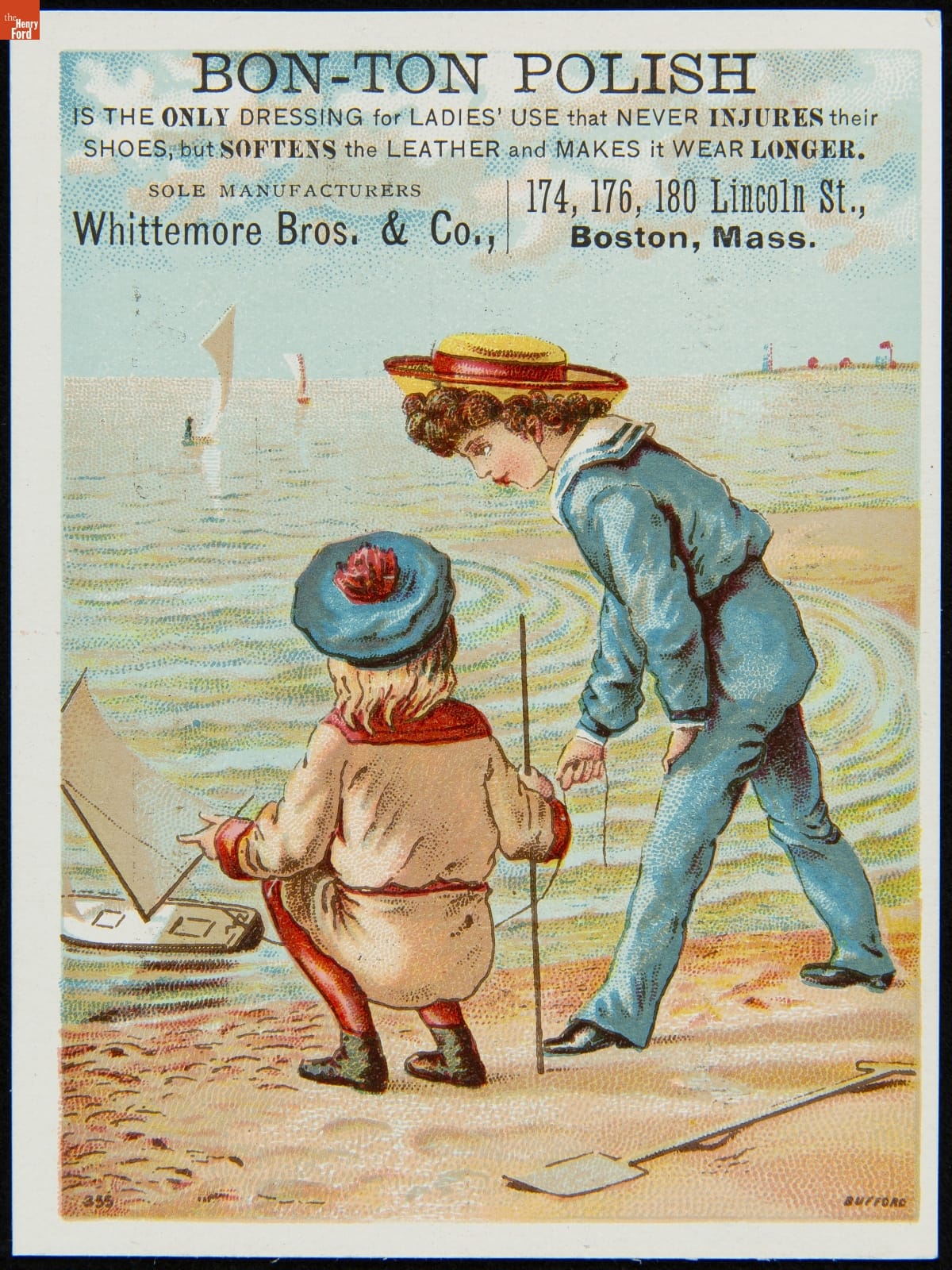
Trade Card for Bon-Ton Shoe Polish, Whittemore Bros. & Co., 1880-1900
In the last third of the nineteenth century, an unprecedented variety of consumer goods and services flooded the American market. Advertisers, armed with new methods of color printing, bombarded potential customers with trade cards. Americans enjoyed and often saved the vibrant little advertisements found in product packages or distributed by local merchants. Many survive as historical records of commercialism in the United States.
- Trade Card for Bon-Ton Shoe Polish, Whittemore Bros. & Co., 1880-1900 - In the last third of the nineteenth century, an unprecedented variety of consumer goods and services flooded the American market. Advertisers, armed with new methods of color printing, bombarded potential customers with trade cards. Americans enjoyed and often saved the vibrant little advertisements found in product packages or distributed by local merchants. Many survive as historical records of commercialism in the United States.
- 1880-1900
- Collections - Artifact
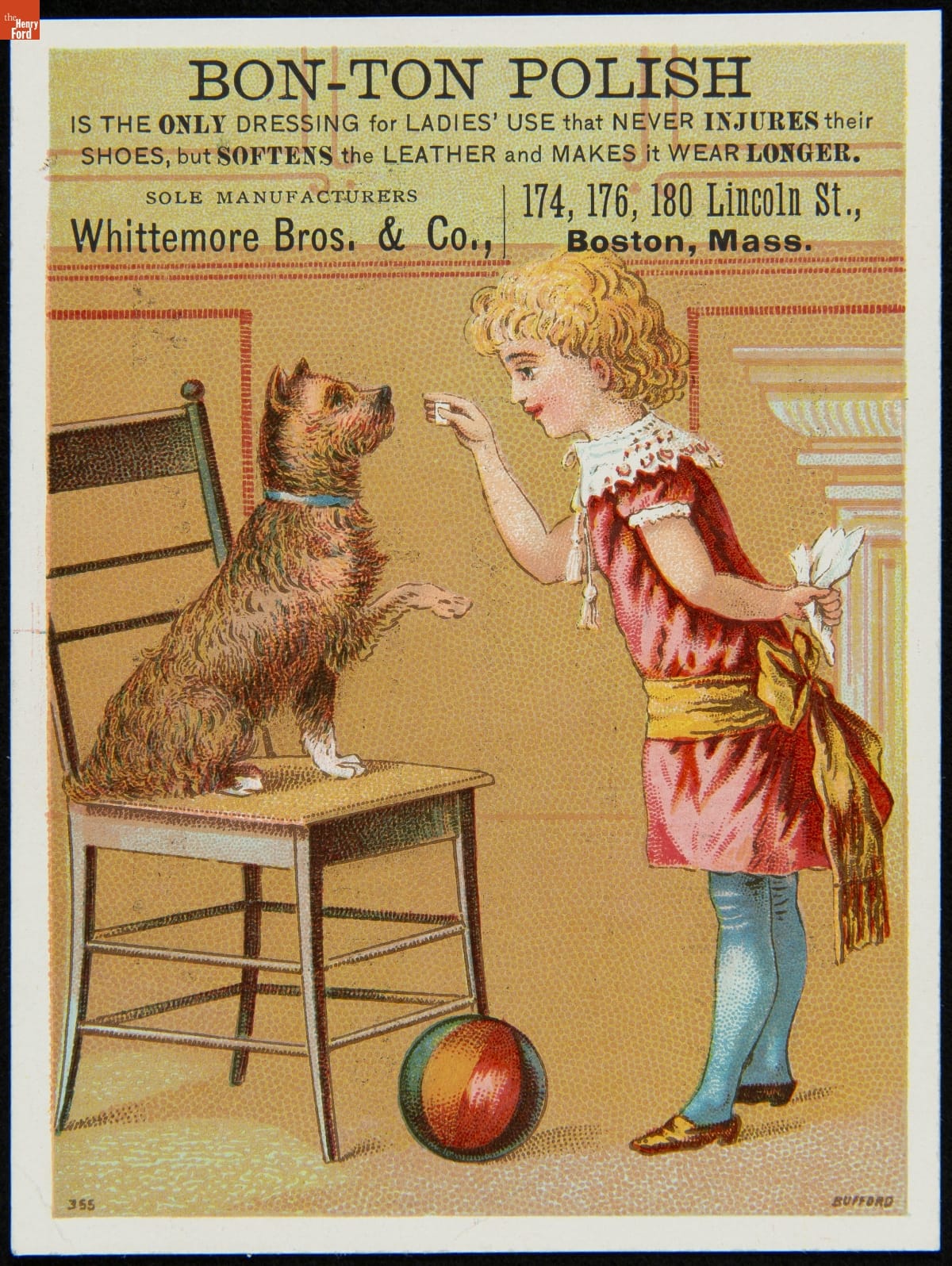
Trade Card for Bon-Ton Shoe Polish, Whittemore Bros. & Co., 1880-1900
In the last third of the nineteenth century, an unprecedented variety of consumer goods and services flooded the American market. Advertisers, armed with new methods of color printing, bombarded potential customers with trade cards. Americans enjoyed and often saved the vibrant little advertisements found in product packages or distributed by local merchants. Many survive as historical records of commercialism in the United States.
- Trade Card for Rising Sun Stove Polish, Morse Bros., 1870-1900 - In the last third of the nineteenth century, an unprecedented variety of consumer goods and services flooded the American market. Advertisers, armed with new methods of color printing, bombarded potential customers with trade cards. Americans enjoyed and often saved the vibrant little advertisements found in product packages or distributed by local merchants. Many survive as historical records of commercialism in the United States.
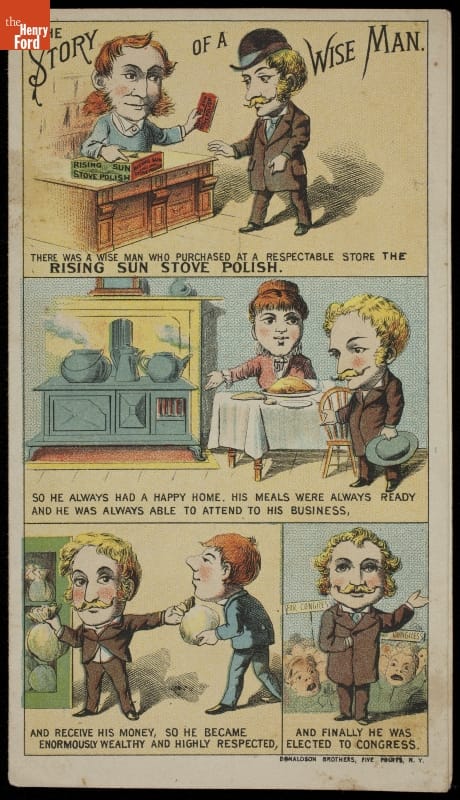
- 1870-1900
- Collections - Artifact
Trade Card for Rising Sun Stove Polish, Morse Bros., 1870-1900
In the last third of the nineteenth century, an unprecedented variety of consumer goods and services flooded the American market. Advertisers, armed with new methods of color printing, bombarded potential customers with trade cards. Americans enjoyed and often saved the vibrant little advertisements found in product packages or distributed by local merchants. Many survive as historical records of commercialism in the United States.
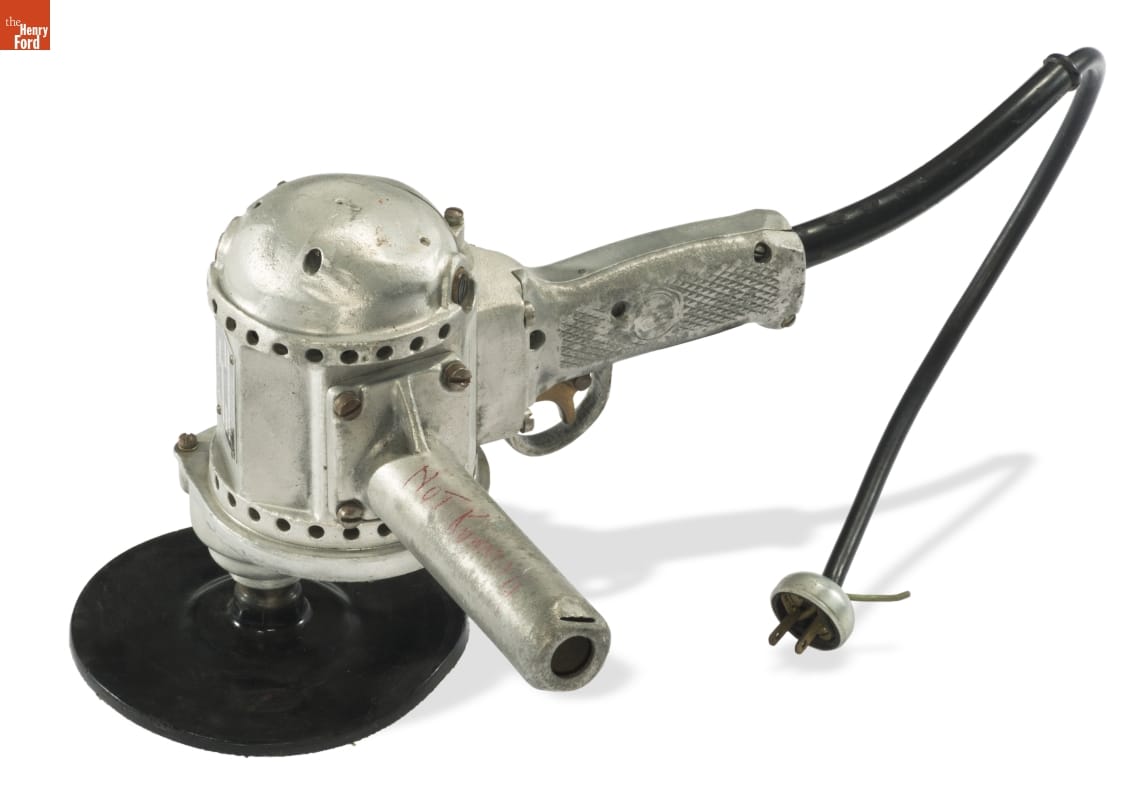
- Black & Decker Type A Disc Sander, 1929 - Alonzo G. Decker and S. Duncan Black, who operated a small manufacturing company in Baltimore, Maryland, began designing and producing electric tools in 1916. Their pistol-style grip and trigger switch, patented the following year, set the standard for power tool design. Black & Decker developed new products as the company expanded through the 1920s, introducing a portable electric sander in 1929.
- 1929
- Collections - Artifact
Black & Decker Type A Disc Sander, 1929
Alonzo G. Decker and S. Duncan Black, who operated a small manufacturing company in Baltimore, Maryland, began designing and producing electric tools in 1916. Their pistol-style grip and trigger switch, patented the following year, set the standard for power tool design. Black & Decker developed new products as the company expanded through the 1920s, introducing a portable electric sander in 1929.
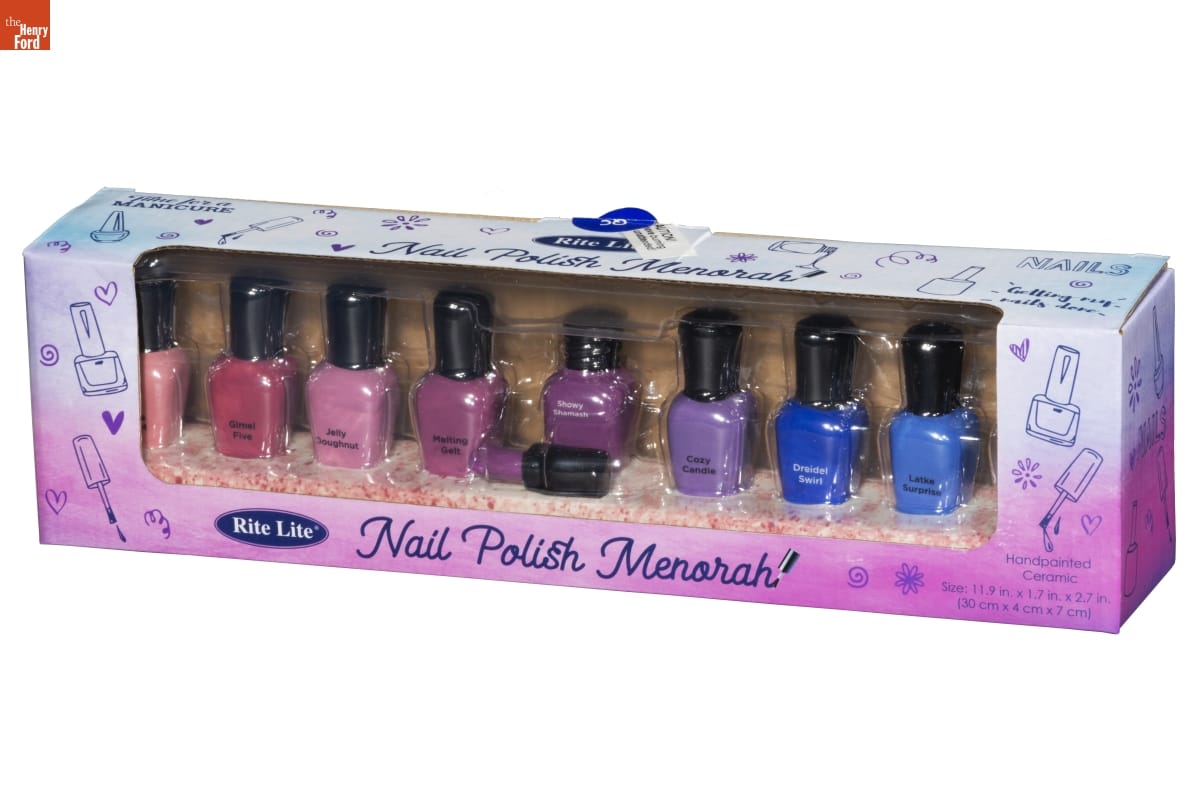
- "Glam It Up: Nail Polish Menorah" Hanukkah Lamp, 2020 -
- 2020
- Collections - Artifact
"Glam It Up: Nail Polish Menorah" Hanukkah Lamp, 2020
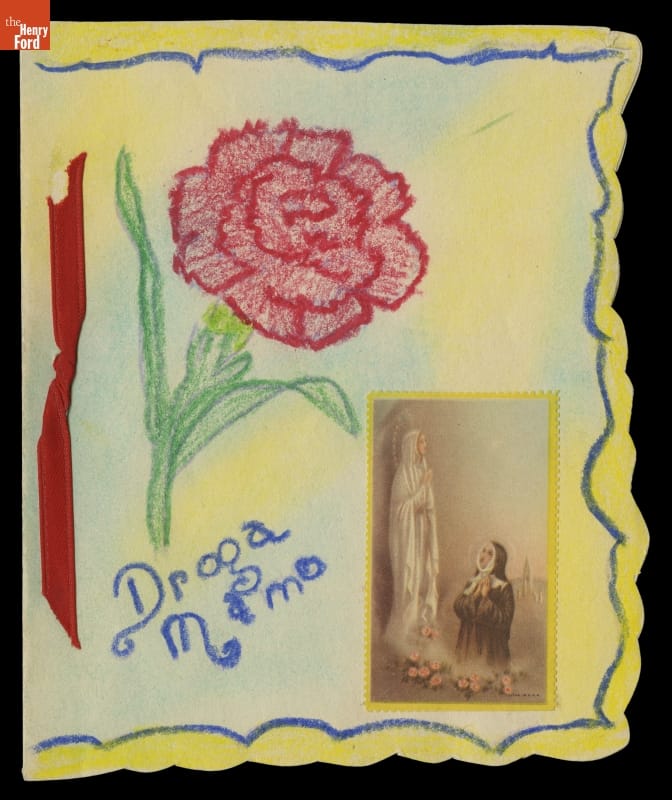
- "Droga Mamo" Handmade Mother's Day Card, 1942 - Mother's Day, a national holiday devoted to honoring mothers, was first officially recognized in 1914. In the following decades, presenting mothers with greeting cards on the second Sunday of May became a popular tradition. A first-grader in South Bend, Indiana made this Mother's Day card for his "Dear Mother" -- a first-generation Polish-American -- in 1942.
- 1942
- Collections - Artifact
"Droga Mamo" Handmade Mother's Day Card, 1942
Mother's Day, a national holiday devoted to honoring mothers, was first officially recognized in 1914. In the following decades, presenting mothers with greeting cards on the second Sunday of May became a popular tradition. A first-grader in South Bend, Indiana made this Mother's Day card for his "Dear Mother" -- a first-generation Polish-American -- in 1942.
- Tin of Shoe Blacking, 1881-1906 -
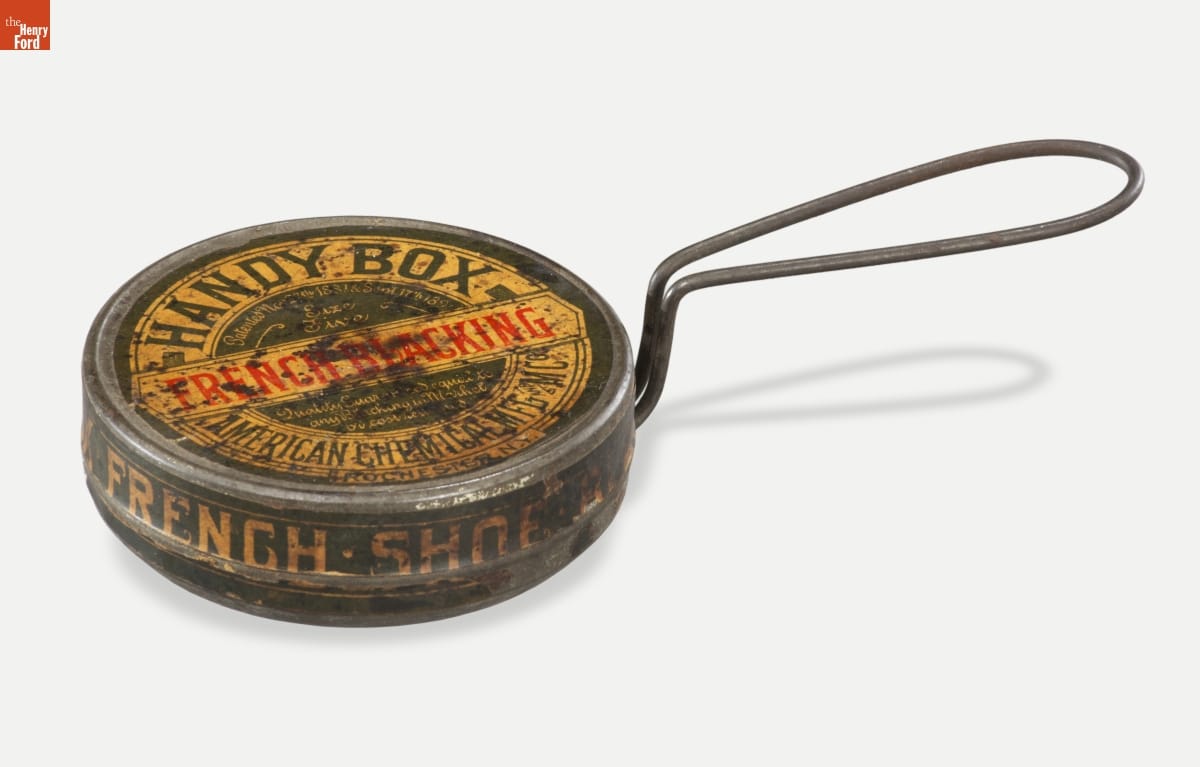
- 1881-1906
- Collections - Artifact
Tin of Shoe Blacking, 1881-1906
- Polishing Bone, 1880-1920 - Late-nineteenth and early-twentieth-century shoemakers turned pieces of leather into footwear. These craftspeople used a wide range of specialized tools to measure, cut, shape, stitch, trim, finish, and decorate their handiwork. Their tools included a variety of knives, hammers, punches, clamps, awls, and polishers and burnishers. Though these tools seem highly specialized, shoemakers were always adapting, using whatever tools were at hand to make shoes.
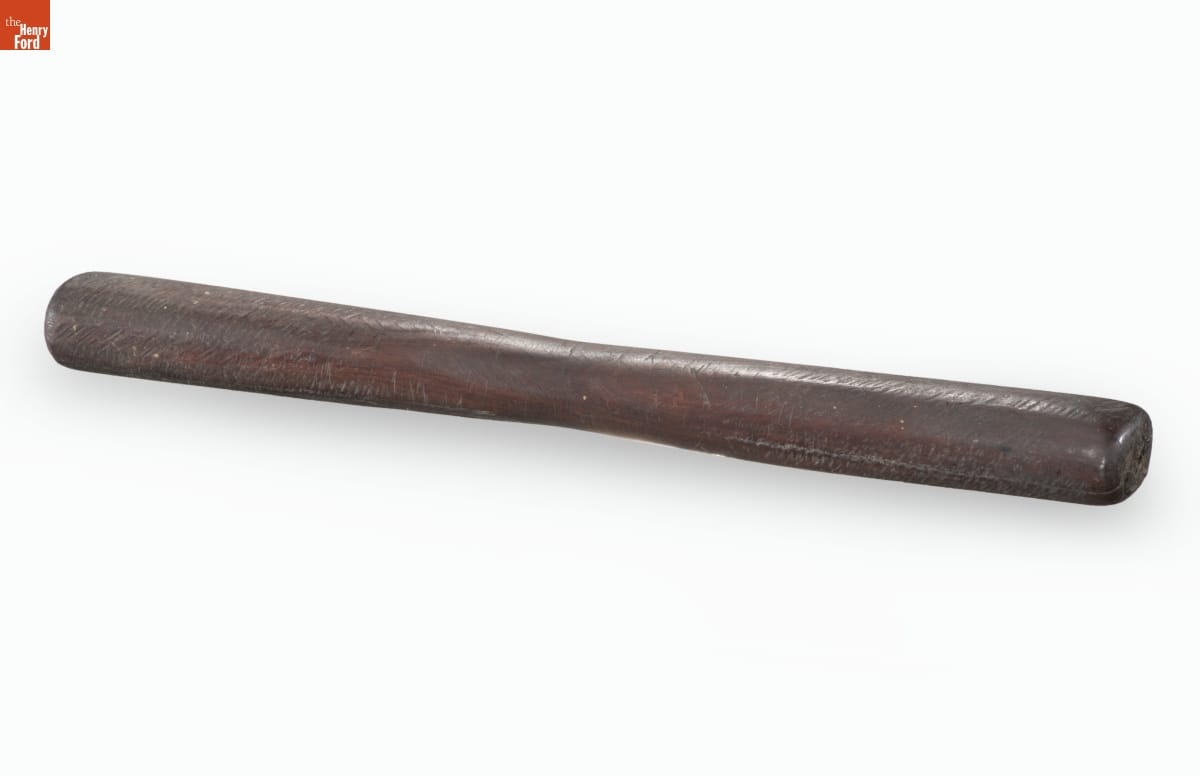
- 1880-1920
- Collections - Artifact
Polishing Bone, 1880-1920
Late-nineteenth and early-twentieth-century shoemakers turned pieces of leather into footwear. These craftspeople used a wide range of specialized tools to measure, cut, shape, stitch, trim, finish, and decorate their handiwork. Their tools included a variety of knives, hammers, punches, clamps, awls, and polishers and burnishers. Though these tools seem highly specialized, shoemakers were always adapting, using whatever tools were at hand to make shoes.