
Search
- High Speed Magnetic-Analog Digital Convertor [sic], circa 1957 -
![High Speed Magnetic-Analog Digital Convertor [sic], circa 1957](https://collections-media.thehenryford.org/CollectionImages/_detail/photos/thf222210.jpg)
- circa 1957
- Collections - Artifact
High Speed Magnetic-Analog Digital Convertor [sic], circa 1957
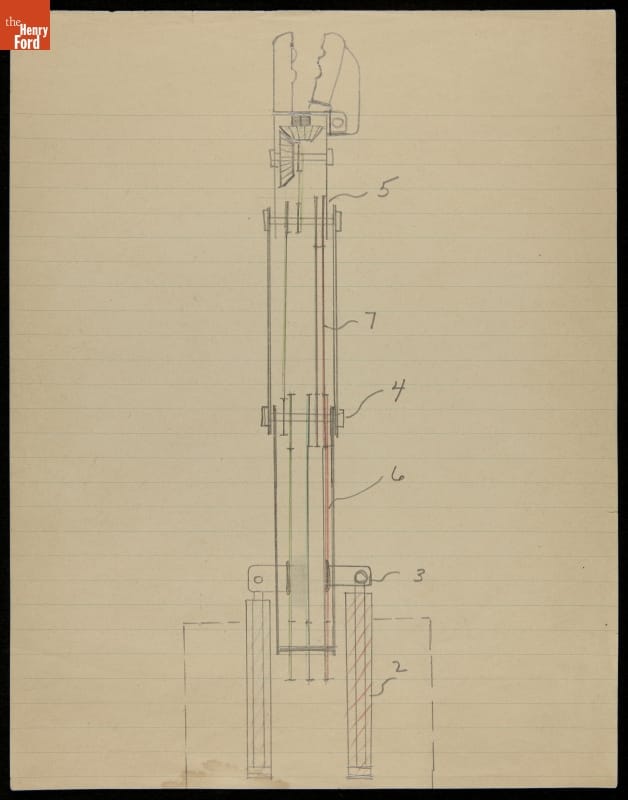
- Unimate Robotic Arm Diagram, circa 1960 - George Devol revolutionized manufacturing with his invention of the Unimate -- the world's first industrial robot. These rugged programmable units were designed to perform repetitive, arduous and hazardous tasks. The first Unimate was installed in a General Motors plant in 1961. This document, part of a larger collection, chronicles the Unimate's conception, construction and operation.
- circa 1960
- Collections - Artifact
Unimate Robotic Arm Diagram, circa 1960
George Devol revolutionized manufacturing with his invention of the Unimate -- the world's first industrial robot. These rugged programmable units were designed to perform repetitive, arduous and hazardous tasks. The first Unimate was installed in a General Motors plant in 1961. This document, part of a larger collection, chronicles the Unimate's conception, construction and operation.
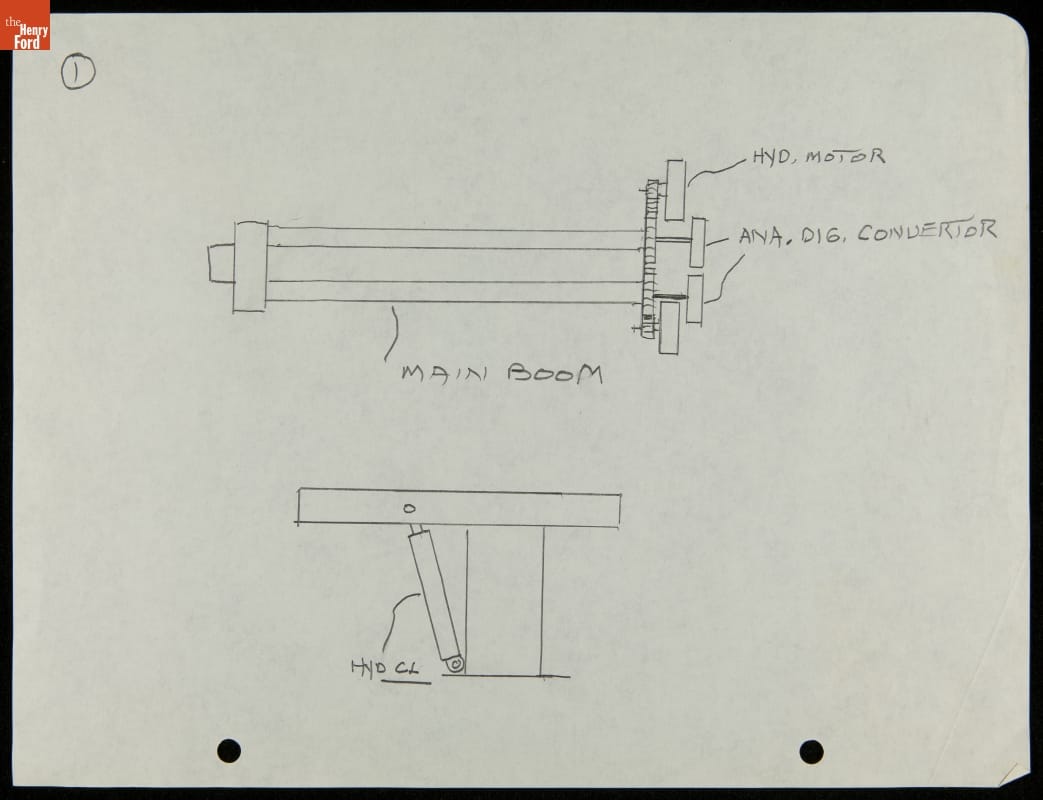
- Diagram, Possibly Unimate Robotic Arm, circa 1960 - George Devol revolutionized manufacturing with his invention of the Unimate -- the world's first industrial robot. These rugged programmable units were designed to perform repetitive, arduous and hazardous tasks. The first Unimate was installed in a General Motors plant in 1961. This document, part of a larger collection, chronicles the Unimate's conception, construction and operation.
- circa 1960
- Collections - Artifact
Diagram, Possibly Unimate Robotic Arm, circa 1960
George Devol revolutionized manufacturing with his invention of the Unimate -- the world's first industrial robot. These rugged programmable units were designed to perform repetitive, arduous and hazardous tasks. The first Unimate was installed in a General Motors plant in 1961. This document, part of a larger collection, chronicles the Unimate's conception, construction and operation.
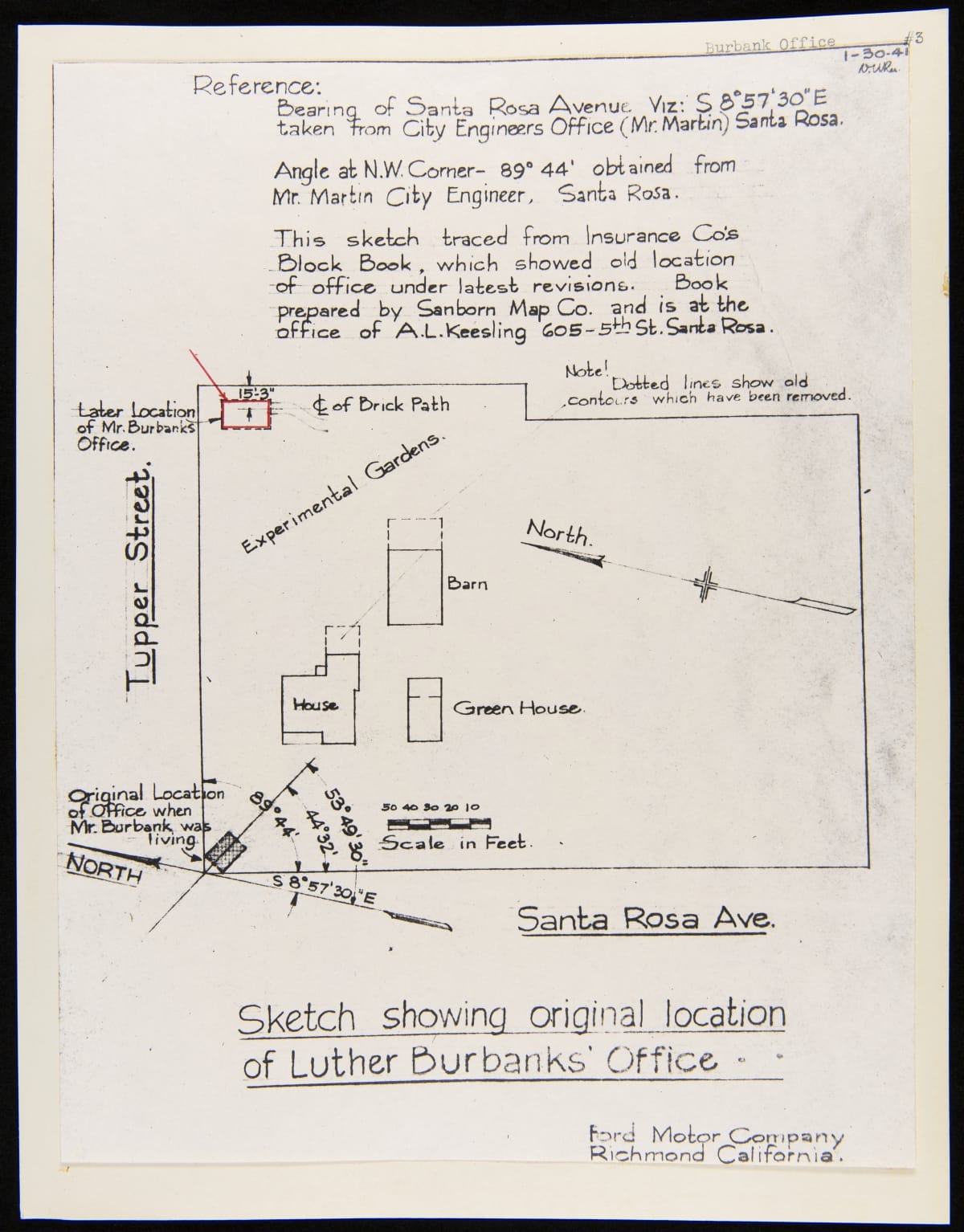
- Sketch Showing Original Location of Luther Burbank Garden Office, Santa Rosa, California, January 30, 1941 - Luther Burbank (1849-1926), a much-heralded American horticulturalist, gained a reputation for selectively breeding more than 800 new fruits, vegetables, flowers, and other plants. He opened a "Bureau of Information" in 1910 to sell seeds and souvenirs. Burbank's widow described it as the "little office" when she offered it to Henry Ford in 1928. This map documents its original locations in Santa Rosa, California.
- January 30, 1941
- Collections - Artifact
Sketch Showing Original Location of Luther Burbank Garden Office, Santa Rosa, California, January 30, 1941
Luther Burbank (1849-1926), a much-heralded American horticulturalist, gained a reputation for selectively breeding more than 800 new fruits, vegetables, flowers, and other plants. He opened a "Bureau of Information" in 1910 to sell seeds and souvenirs. Burbank's widow described it as the "little office" when she offered it to Henry Ford in 1928. This map documents its original locations in Santa Rosa, California.
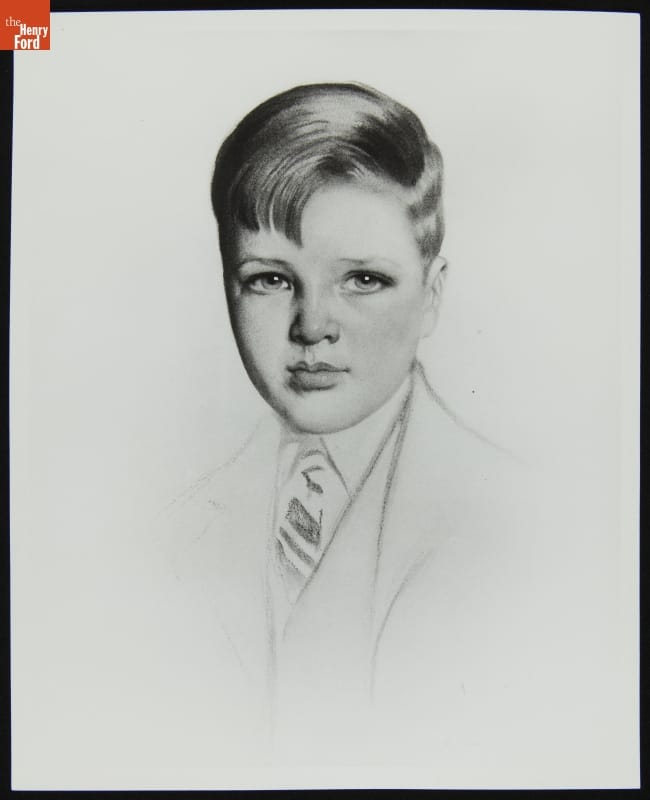
- Sketch of Young Henry Ford II, circa 1925 -
- circa 1925
- Collections - Artifact
Sketch of Young Henry Ford II, circa 1925
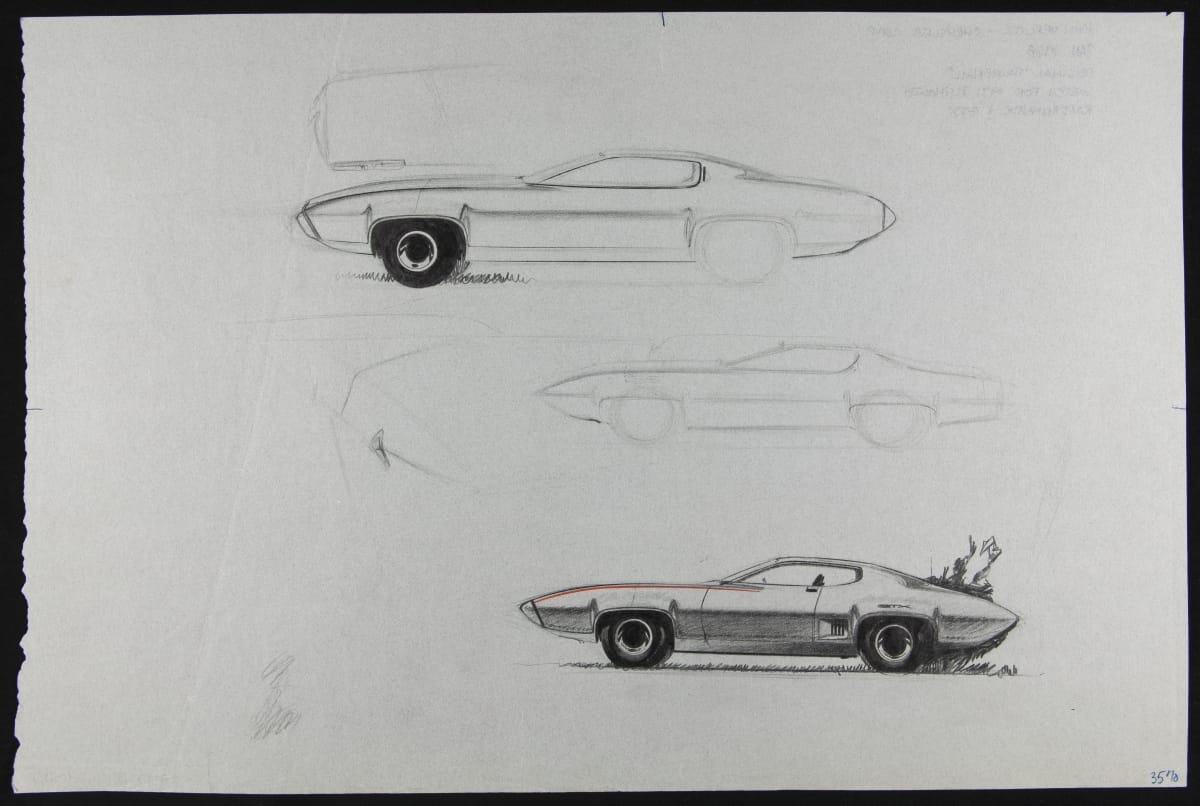
- Original Design Sketch of 1971 Plymouth Road Runner and GTX by John Herlitz, January 1968 - After earning his degree from the Pratt Institute, John Herlitz joined Plymouth's design studio in 1964. He led styling efforts on several striking models from the muscle car era including the 1970 Plymouth Barracuda, the 1971 Plymouth GTX, and the 1971 Plymouth Road Runner. Herlitz retired as Chrysler's senior vice-president for product design in 2001.
- January 01, 1968
- Collections - Artifact
Original Design Sketch of 1971 Plymouth Road Runner and GTX by John Herlitz, January 1968
After earning his degree from the Pratt Institute, John Herlitz joined Plymouth's design studio in 1964. He led styling efforts on several striking models from the muscle car era including the 1970 Plymouth Barracuda, the 1971 Plymouth GTX, and the 1971 Plymouth Road Runner. Herlitz retired as Chrysler's senior vice-president for product design in 2001.
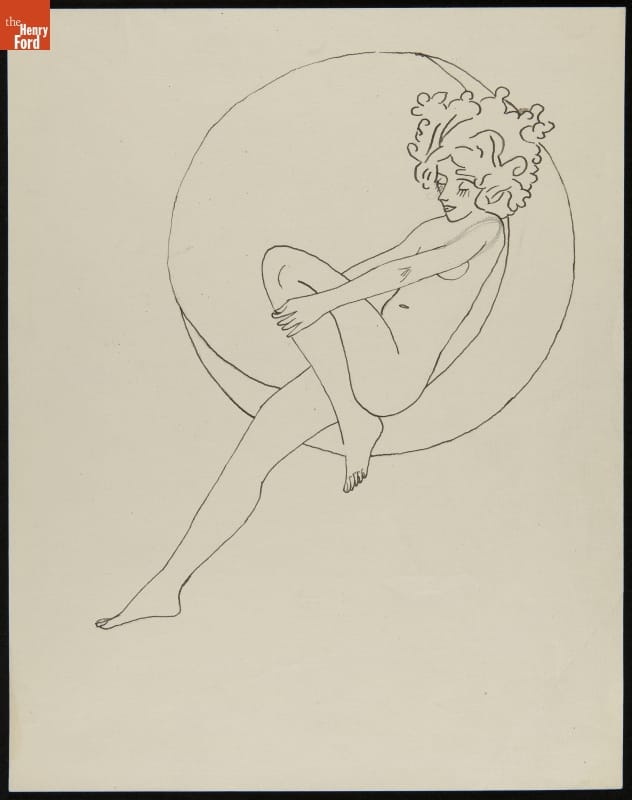
- Tattoo Sketch, 1915-1950 - Tattoos communicate stories. Their content ranges from deeply personal and traditional--to regrettable and frivolous. In the early 1900s, "Professor" Waters apprenticed as a tattoo artist in carnivals and New York's Bowery District. He ran a successful supply shop in Detroit (1918-1939), patenting the standard "two-coil" tattoo machine in 1929. Designs from his flash sheets continue to inspire tattooists today.
- 1915-1950
- Collections - Artifact
Tattoo Sketch, 1915-1950
Tattoos communicate stories. Their content ranges from deeply personal and traditional--to regrettable and frivolous. In the early 1900s, "Professor" Waters apprenticed as a tattoo artist in carnivals and New York's Bowery District. He ran a successful supply shop in Detroit (1918-1939), patenting the standard "two-coil" tattoo machine in 1929. Designs from his flash sheets continue to inspire tattooists today.
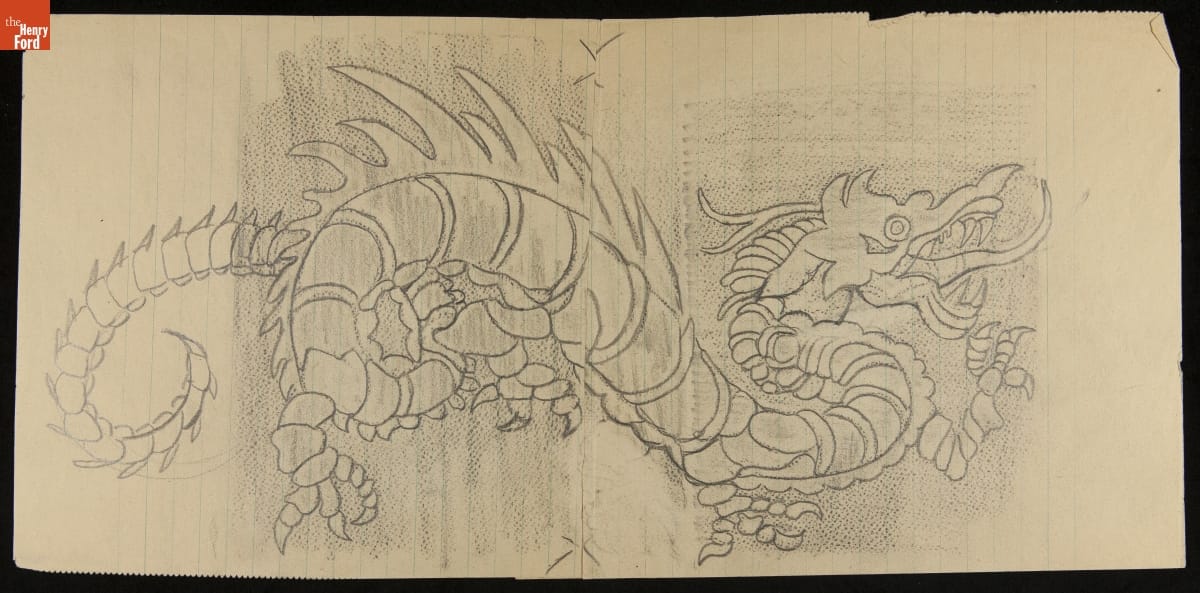
- Tattoo Sketch, 1915-1950 - Tattoos communicate stories. Their content ranges from deeply personal and traditional--to regrettable and frivolous. In the early 1900s, "Professor" Waters apprenticed as a tattoo artist in carnivals and New York's Bowery District. He ran a successful supply shop in Detroit (1918-1939), patenting the standard "two-coil" tattoo machine in 1929. Designs from his flash sheets continue to inspire tattooists today.
- 1915-1950
- Collections - Artifact
Tattoo Sketch, 1915-1950
Tattoos communicate stories. Their content ranges from deeply personal and traditional--to regrettable and frivolous. In the early 1900s, "Professor" Waters apprenticed as a tattoo artist in carnivals and New York's Bowery District. He ran a successful supply shop in Detroit (1918-1939), patenting the standard "two-coil" tattoo machine in 1929. Designs from his flash sheets continue to inspire tattooists today.
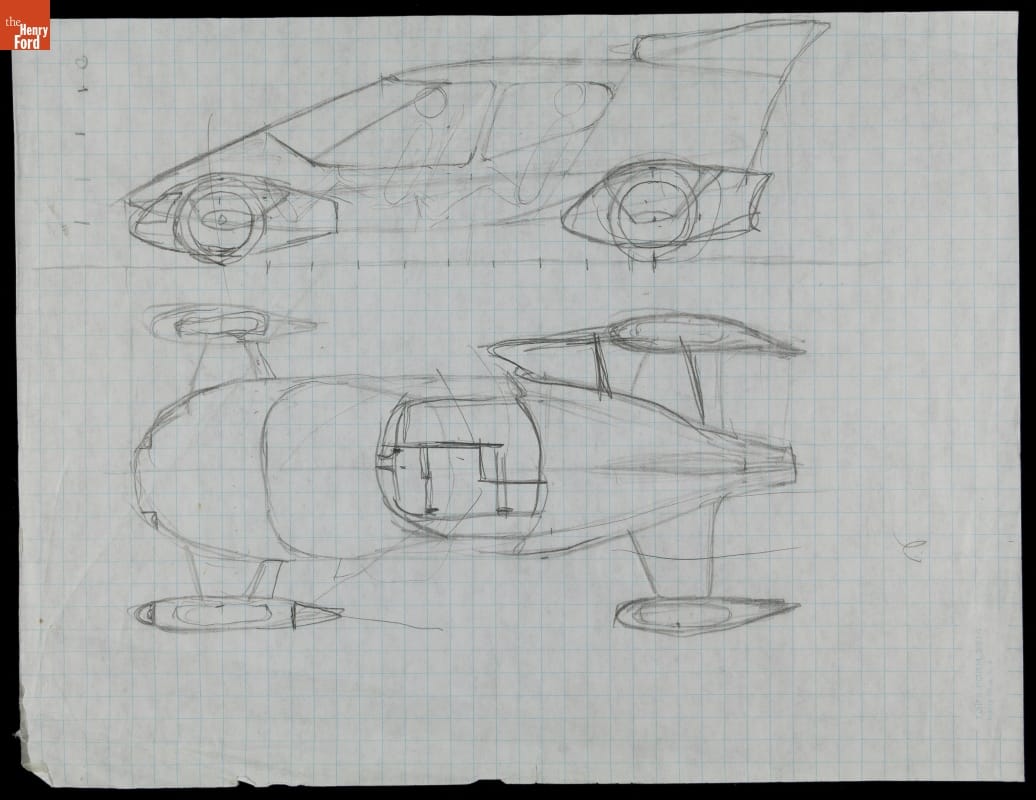
- Early Design Sketch of the Edison2 Very Light Car, 2008 - This sketch of the Edison2 was drawn freehand in a coffee shop; it might appear hasty, but its creator is an aerodynamics engineer -- an expert in stealth aircraft technology with decades of wind tunnel experience. While the next steps involved computer-aided design, rough explorations like this were crucial to the development -- and final shape -- of the Edison2.
- August 2008-September 2008
- Collections - Artifact
Early Design Sketch of the Edison2 Very Light Car, 2008
This sketch of the Edison2 was drawn freehand in a coffee shop; it might appear hasty, but its creator is an aerodynamics engineer -- an expert in stealth aircraft technology with decades of wind tunnel experience. While the next steps involved computer-aided design, rough explorations like this were crucial to the development -- and final shape -- of the Edison2.
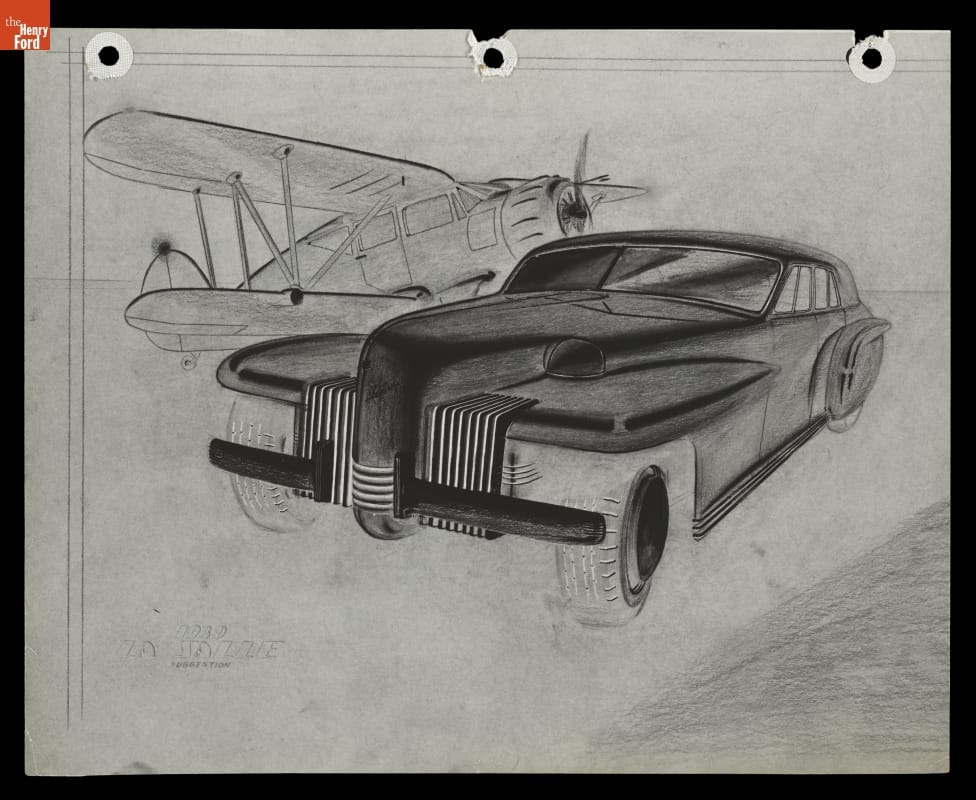
- Sketch, "1939 LaSalle Suggestion" - General Motors introduced LaSalle for 1927 as a "companion car" to Cadillac. LaSalle automobiles were priced below those from Cadillac, but generally featured Cadillac engineering and quality. This sketch shows a design proposal for a 1939 model. GM ended LaSalle production after the 1940 model year.
- 1939
- Collections - Artifact
Sketch, "1939 LaSalle Suggestion"
General Motors introduced LaSalle for 1927 as a "companion car" to Cadillac. LaSalle automobiles were priced below those from Cadillac, but generally featured Cadillac engineering and quality. This sketch shows a design proposal for a 1939 model. GM ended LaSalle production after the 1940 model year.