
Search
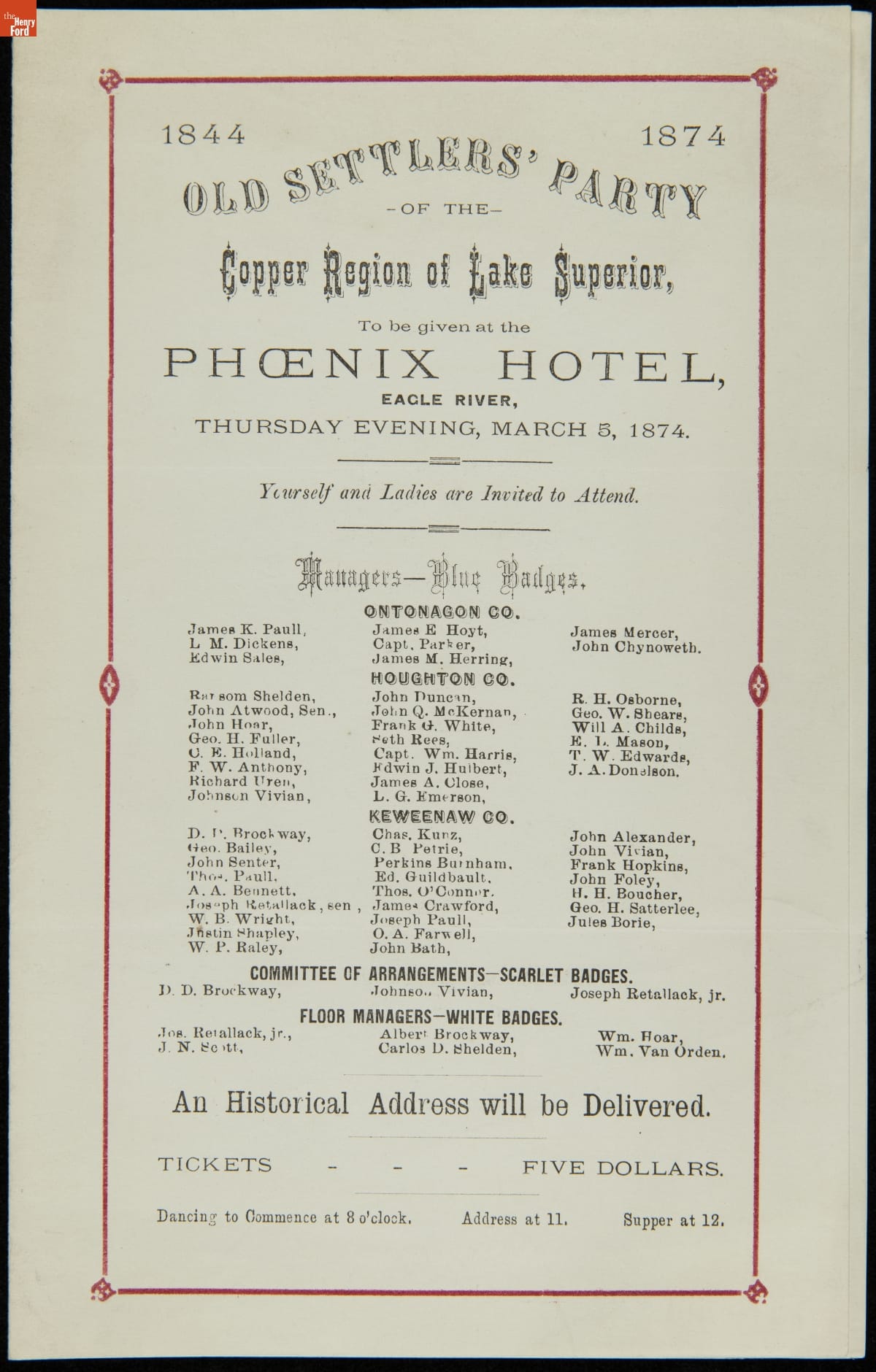
- Program, "Old Settlers' Party of the Copper Region of Lake Superior," Phoenix Hotel, Eagle River, Michigan, March 5, 1874 -
- March 05, 1874
- Collections - Artifact
Program, "Old Settlers' Party of the Copper Region of Lake Superior," Phoenix Hotel, Eagle River, Michigan, March 5, 1874
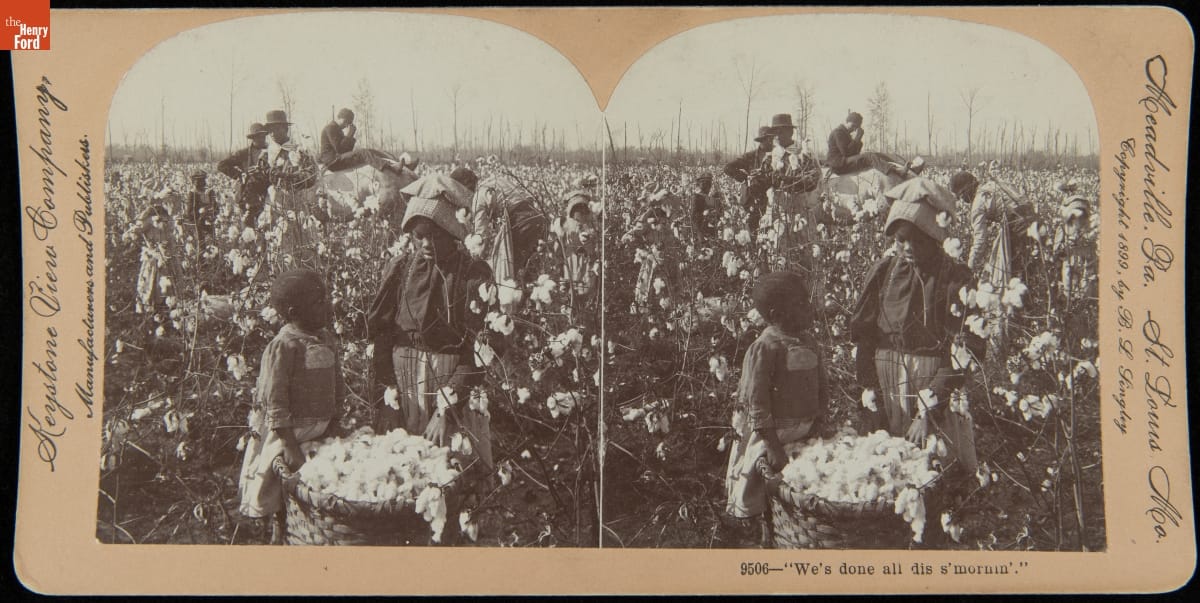
- "We's done all dis s'mornin'," 1899 - This stereograph features children with a full basket of cotton, the cash crop dominating southern agriculture at the time. The caption, in dialect, implied that these children were uneducated. Its translation into six languages conveyed that impression internationally. In reality, cotton pickers earned low wages (one penny per pound) and their impoverished condition undermined access to adequate education.
- 1899
- Collections - Artifact
"We's done all dis s'mornin'," 1899
This stereograph features children with a full basket of cotton, the cash crop dominating southern agriculture at the time. The caption, in dialect, implied that these children were uneducated. Its translation into six languages conveyed that impression internationally. In reality, cotton pickers earned low wages (one penny per pound) and their impoverished condition undermined access to adequate education.
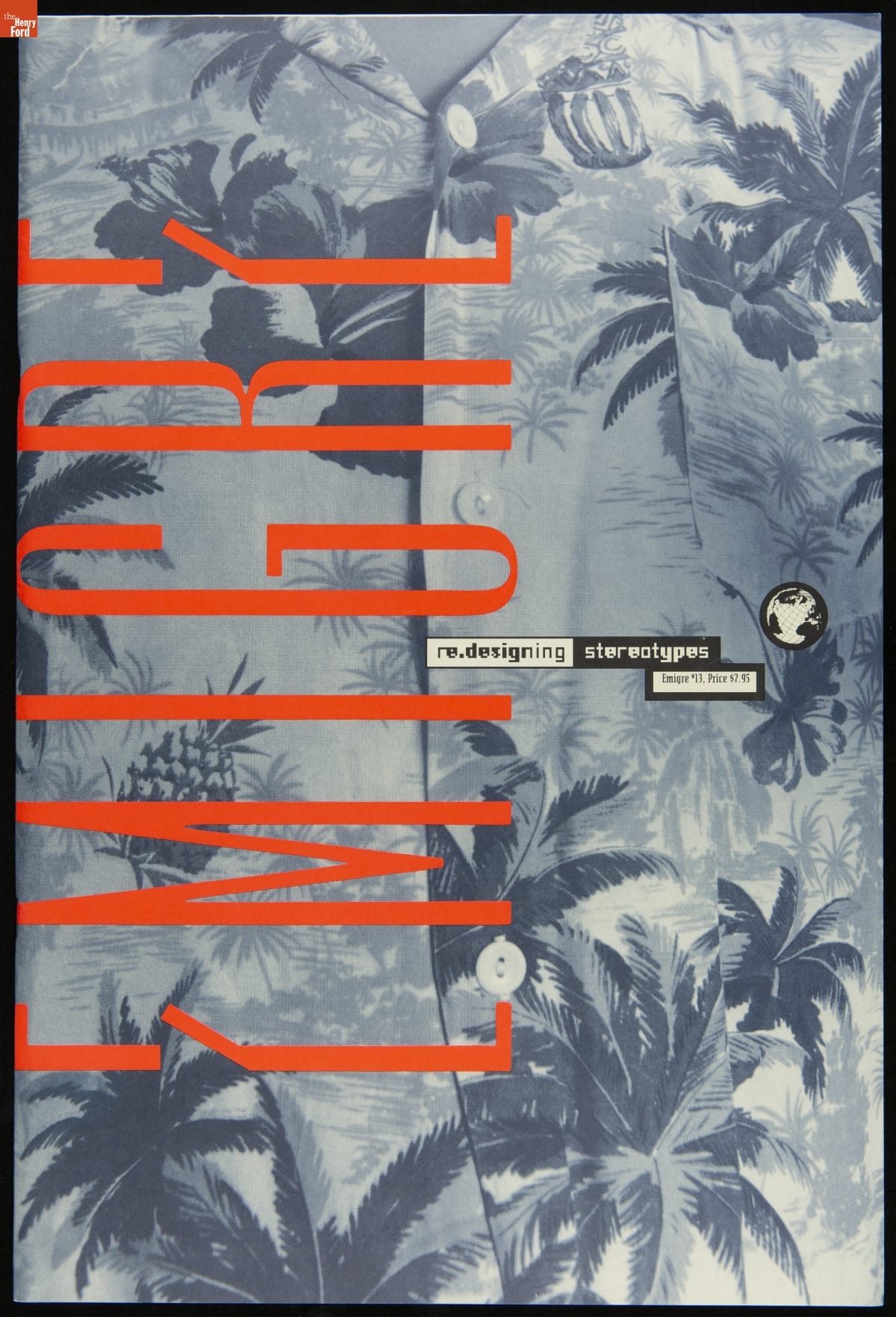
- Magazine, Emigre No. 13, "Redesigning Stereotypes," 1989 - Emigre is a digital type foundry established by Rudy VanderLans and Zuzana Licko. The company's history is linked with the introduction of the 1984 Macintosh computer, used to design their early bitmapped typefaces. Emigre's digital work gained notoriety -- defying visual communication standards with fractured, layered combinations of text and image. <em>Emigre</em> magazine showcased their fonts and promoted groundbreaking designers.
- 1989
- Collections - Artifact
Magazine, Emigre No. 13, "Redesigning Stereotypes," 1989
Emigre is a digital type foundry established by Rudy VanderLans and Zuzana Licko. The company's history is linked with the introduction of the 1984 Macintosh computer, used to design their early bitmapped typefaces. Emigre's digital work gained notoriety -- defying visual communication standards with fractured, layered combinations of text and image. Emigre magazine showcased their fonts and promoted groundbreaking designers.
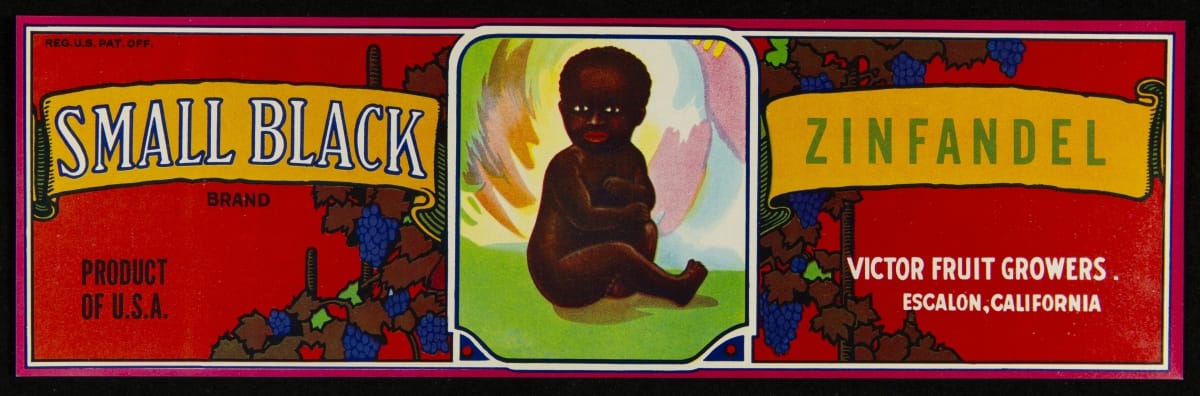
- Crate Label, "Small Black Brand Zinfandel Grapes," circa 1940 - Lithographers created colorful, eye-catching labels to help sell products. Designs often featured popular themes or motifs; some also reflected the prejudices of the time. This mid-20th-century label depicts a small black child with pronounced red lips -- a pernicious and persistent stereotype. These images dehumanized African Americans and affirmed the discriminatory biases many white Americans held.
- circa 1940
- Collections - Artifact
Crate Label, "Small Black Brand Zinfandel Grapes," circa 1940
Lithographers created colorful, eye-catching labels to help sell products. Designs often featured popular themes or motifs; some also reflected the prejudices of the time. This mid-20th-century label depicts a small black child with pronounced red lips -- a pernicious and persistent stereotype. These images dehumanized African Americans and affirmed the discriminatory biases many white Americans held.
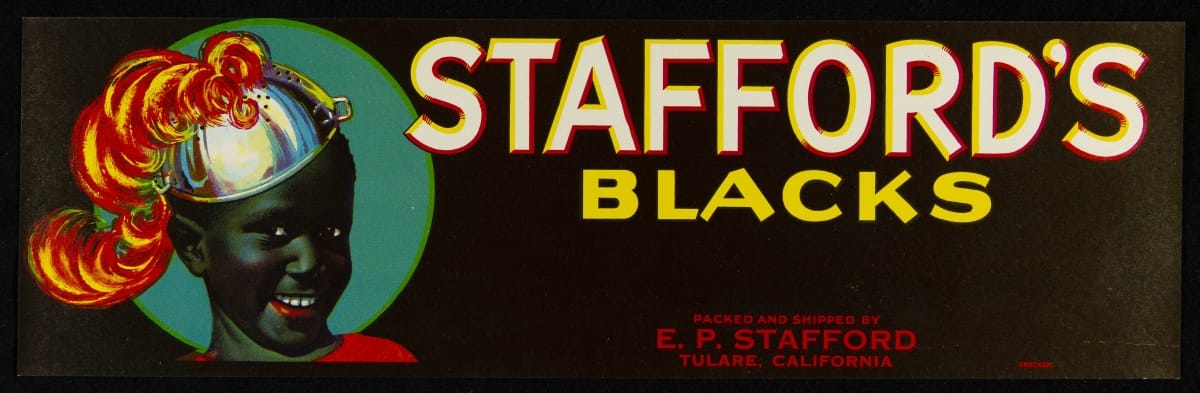
- Crate Label, "Stafford's Blacks Brand Grapes," circa 1930 - Lithographers created colorful, eye-catching labels to help sell products. Designs often featured popular themes or motifs; some also reflected the prejudices of the time. Illustrators often depicted African-Americans in comical situations -- like this boy wearing a colander as a hat. These images dehumanized African Americans and affirmed the discriminatory biases many white Americans held.
- circa 1930
- Collections - Artifact
Crate Label, "Stafford's Blacks Brand Grapes," circa 1930
Lithographers created colorful, eye-catching labels to help sell products. Designs often featured popular themes or motifs; some also reflected the prejudices of the time. Illustrators often depicted African-Americans in comical situations -- like this boy wearing a colander as a hat. These images dehumanized African Americans and affirmed the discriminatory biases many white Americans held.
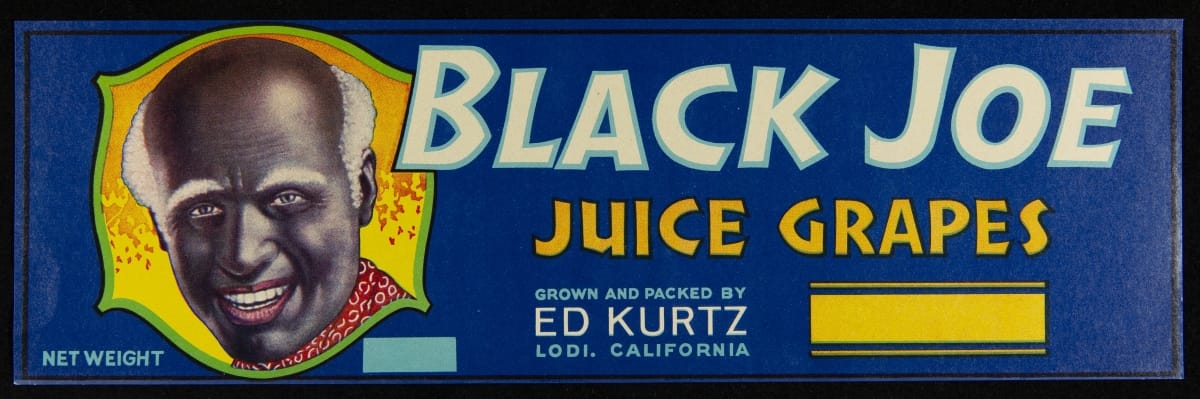
- Crate Label, "Black Joe Brand Juice Grapes," 1930-1950 - Lithographers created colorful, eye-catching labels to help sell products. Designs often featured popular themes or motifs; some also reflected the prejudices of the time. To early 20th-century white consumers this seemingly innocuous image of an elderly African-American idealized nonexistent times when whites believed they ruled benevolently, and blacks were perceived as non-threatening. These images dehumanized African-Americans and affirmed the discriminatory biases many white Americans held.
- 1930-1950
- Collections - Artifact
Crate Label, "Black Joe Brand Juice Grapes," 1930-1950
Lithographers created colorful, eye-catching labels to help sell products. Designs often featured popular themes or motifs; some also reflected the prejudices of the time. To early 20th-century white consumers this seemingly innocuous image of an elderly African-American idealized nonexistent times when whites believed they ruled benevolently, and blacks were perceived as non-threatening. These images dehumanized African-Americans and affirmed the discriminatory biases many white Americans held.
- "The Yellow Pages," 2022 -
- 2022
- Collections - Artifact
"The Yellow Pages," 2022
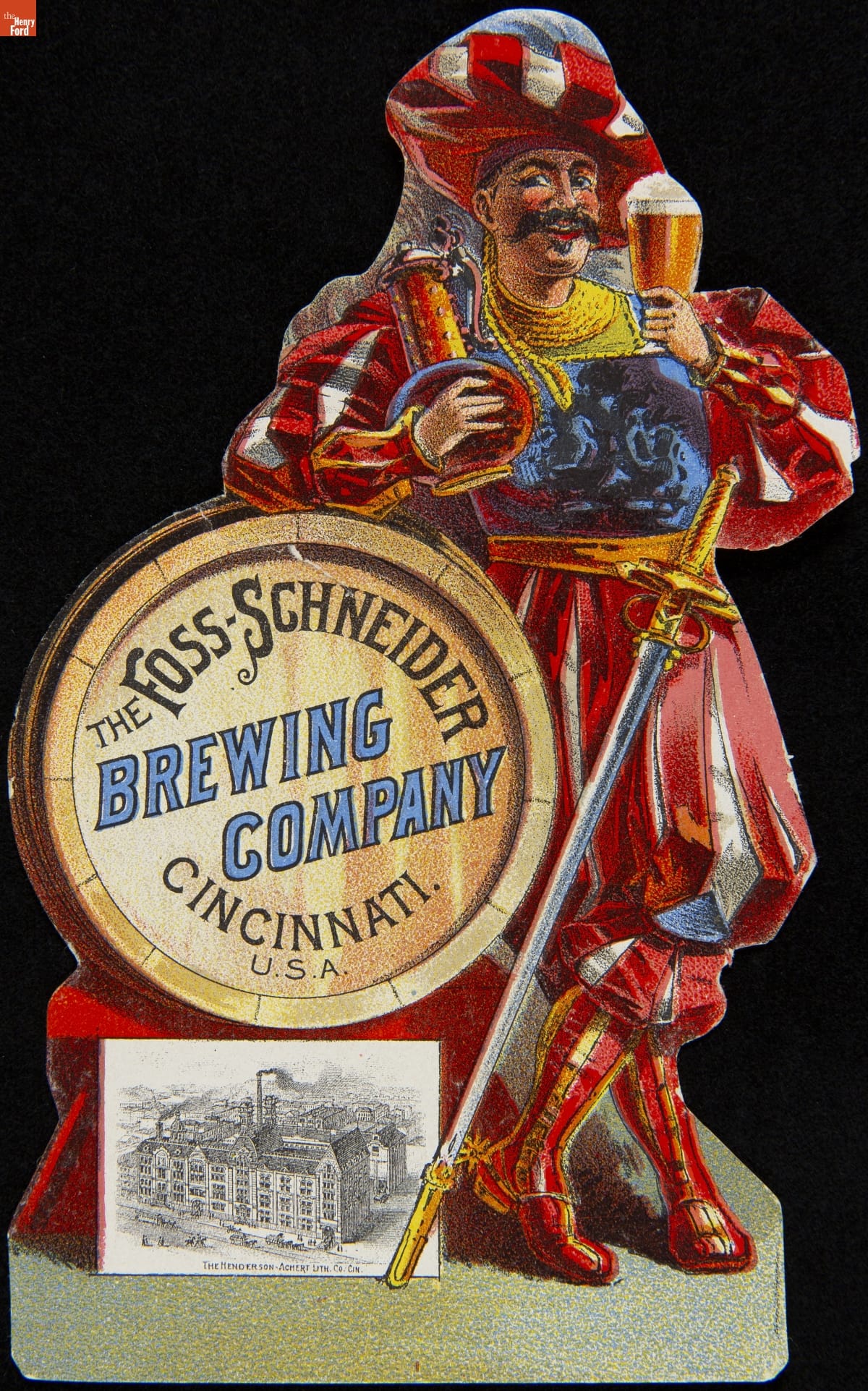
- Trade Card for Foss-Schneider Brewing Company, 1880-1900 - In the last third of the nineteenth century, an unprecedented variety of consumer goods and services flooded the American market. Advertisers, armed with new methods of color printing, bombarded potential customers with trade cards. Americans enjoyed and often saved the vibrant little advertisements found in product packages or distributed by local merchants. Many survive as historical records of commercialism in the United States.
- 1880-1900
- Collections - Artifact
Trade Card for Foss-Schneider Brewing Company, 1880-1900
In the last third of the nineteenth century, an unprecedented variety of consumer goods and services flooded the American market. Advertisers, armed with new methods of color printing, bombarded potential customers with trade cards. Americans enjoyed and often saved the vibrant little advertisements found in product packages or distributed by local merchants. Many survive as historical records of commercialism in the United States.
- Recipe Booklet, "American Oriental Cookery: Quick, Easy, and Intriguing Ways to Add Zest to Your Menus," 1962 -
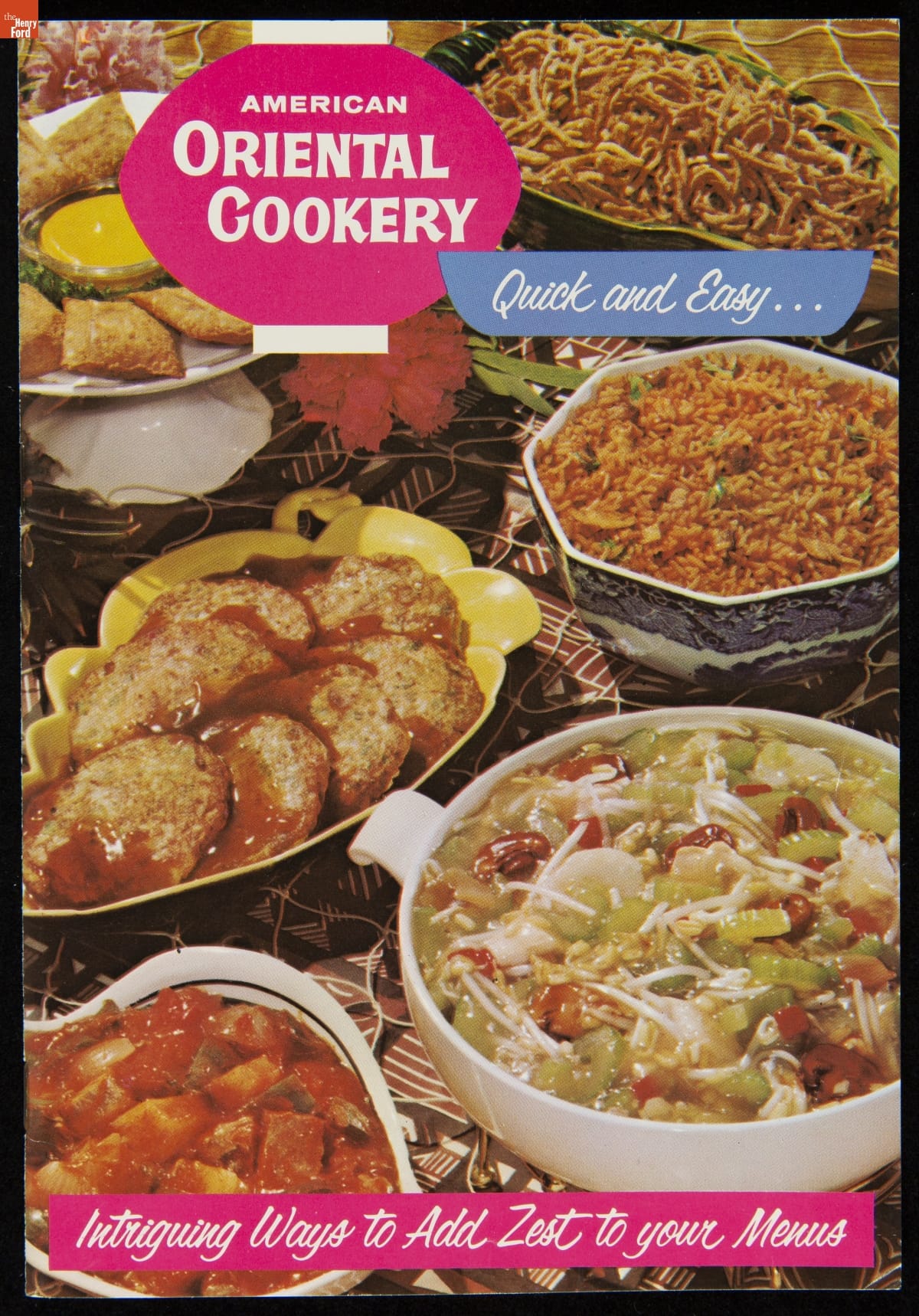
- 1962
- Collections - Artifact
Recipe Booklet, "American Oriental Cookery: Quick, Easy, and Intriguing Ways to Add Zest to Your Menus," 1962
- Advertising Poster, "Old Fashion Molasses," circa 1900 - This turn-of-the-twentieth-century advertisement was used to sell Old Fashion Molasses. This and similar ads with depictions of African American also reflect the racial prejudices of the time. To white consumers this seemingly innocuous image of a smiling African-American woman idealized nonexistent times when whites believed they ruled benevolently and blacks "knew their place." The added stereotypical language also supported this racial view.

- circa 1900
- Collections - Artifact
Advertising Poster, "Old Fashion Molasses," circa 1900
This turn-of-the-twentieth-century advertisement was used to sell Old Fashion Molasses. This and similar ads with depictions of African American also reflect the racial prejudices of the time. To white consumers this seemingly innocuous image of a smiling African-American woman idealized nonexistent times when whites believed they ruled benevolently and blacks "knew their place." The added stereotypical language also supported this racial view.